




What's Happening?
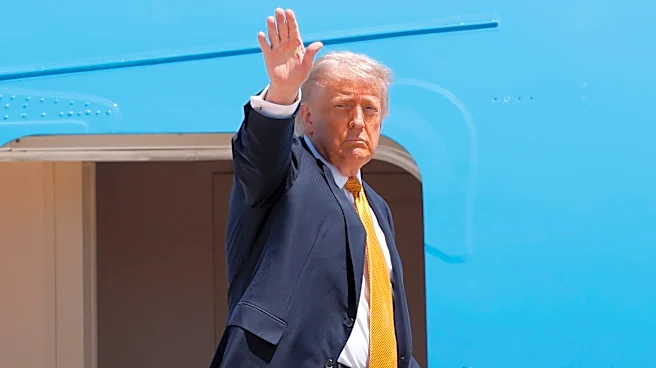
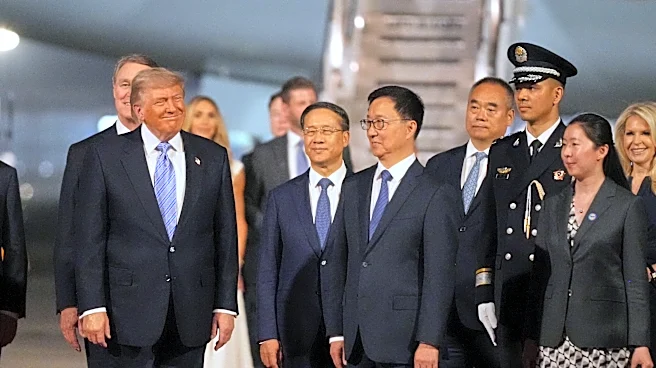
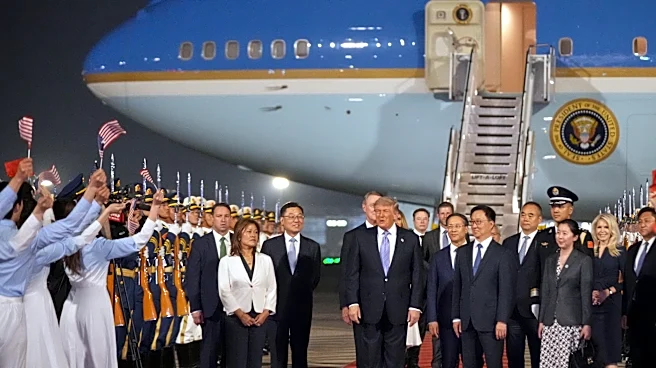
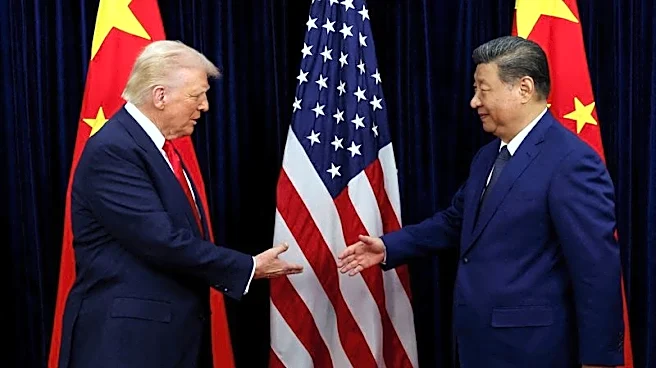
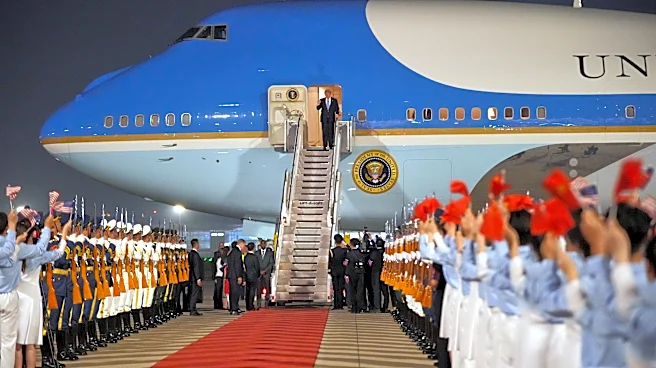
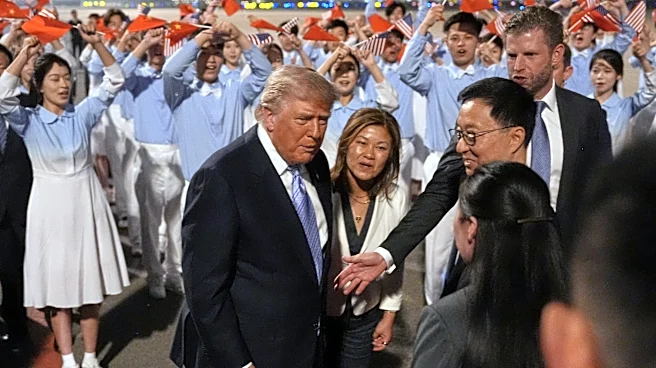
President Donald Trump engaged in a heated exchange with New York Times White House and National Security Correspondent David Sanger aboard Air Force One. The confrontation occurred after President Trump's visit to Beijing, China, where he met with President Xi
Jinping. During the flight back, Trump addressed the press, and when Sanger questioned him about the Iran War, Trump responded with a series of insults, labeling Sanger's reporting as 'treasonous' and 'fake.' Trump claimed a total military victory in Iran, asserting that the U.S. had dismantled Iran's military capabilities, including its Navy and Air Force. He criticized the media, particularly The New York Times and CNN, for allegedly misrepresenting the situation and contributing to a decline in their subscriber base.
Why It's Important?
This incident highlights the ongoing tension between President Trump and the media, particularly with major outlets like The New York Times and CNN. Trump's accusations of 'fake news' and 'treasonous' reporting reflect his broader strategy of discrediting media narratives that contradict his administration's claims. This confrontation underscores the challenges faced by journalists covering the Trump administration, as they navigate accusations of bias and misinformation. The exchange also illustrates the polarized media environment in the U.S., where trust in traditional news sources is increasingly questioned by political leaders and the public. The implications for press freedom and the role of journalism in holding power to account are significant, as such attacks may influence public perception and the media's ability to report independently.
What's Next?
The fallout from this exchange may lead to further scrutiny of media practices and the relationship between the press and the presidency. Journalists and media organizations might respond by defending their reporting and emphasizing the importance of press freedom. This incident could also prompt discussions about the ethical responsibilities of both the media and political leaders in maintaining a healthy democratic discourse. As the 2026 election cycle approaches, the dynamics between the media and political figures are likely to intensify, with potential implications for public trust and engagement in the democratic process.