



What's Happening?
Researchers at the Max Delbrück Center and the University of Oxford have discovered that autophagy, a cellular process of breaking down and recycling components, plays a crucial role in the asymmetric cell division of T stem cells. This process affects
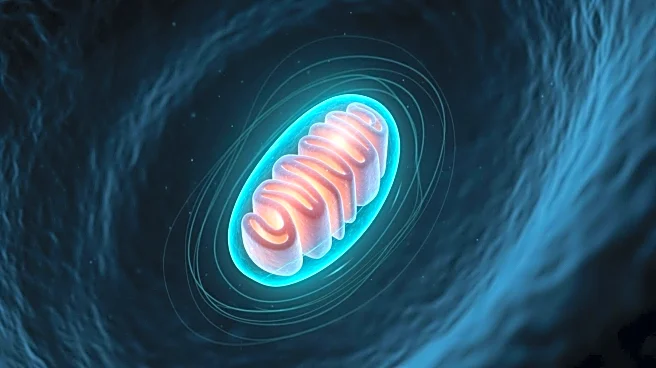
the distribution of mitochondria between daughter cells, influencing their fate as either short-lived effector T cells or long-lived memory T cells. The study, published in Nature Cell Biology, suggests that enhancing autophagy could improve memory T cell production, potentially boosting vaccine responses in older adults.
Why It's Important?
The findings provide new insights into the mechanisms of T cell differentiation, which is vital for effective immune responses. By understanding how autophagy influences mitochondrial inheritance and T cell fate, researchers can explore strategies to enhance immune memory, particularly in aging populations. This research could lead to improved vaccine efficacy and better protection against infections, addressing a critical need in public health. The study also highlights the potential of targeting mitochondrial inheritance as a therapeutic approach to rejuvenate the immune system.
What's Next?
Future research will focus on validating these findings in human T cells and exploring therapeutic interventions that enhance autophagy. By boosting autophagy during T cell division, it may be possible to increase the production of memory cells, thereby strengthening long-term immunity. Additionally, targeting metabolic pathways associated with mitochondrial inheritance could offer new avenues for modulating immune responses, with implications for vaccine development and immune system rejuvenation.