






What's Happening?
Farmers are increasingly facing water scarcity challenges, prompting the need for more efficient irrigation methods. A new precision agriculture technology has been developed to address this issue by mapping soil moisture on a tree-by-tree basis. This
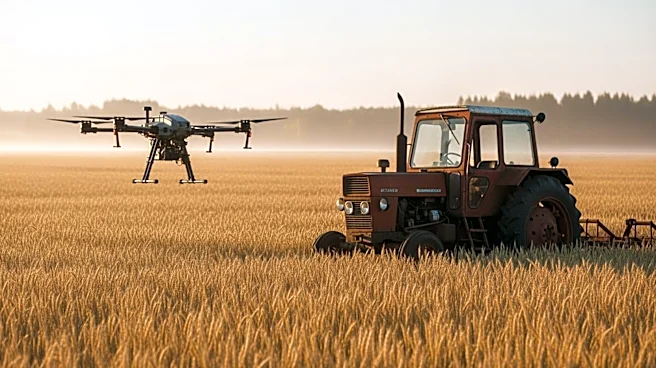
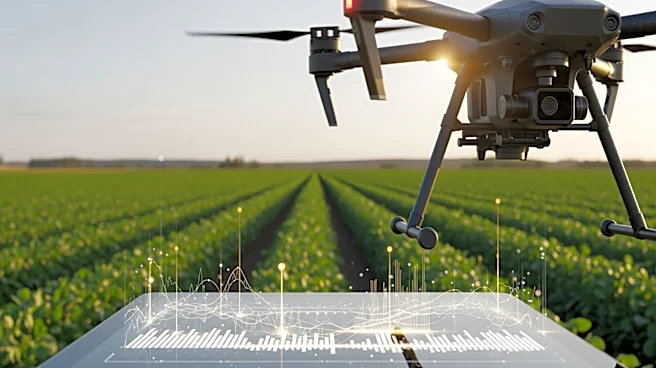
system utilizes a robot that traverses orchards to collect detailed soil data, offering a more comprehensive view of water distribution compared to traditional soil sensors. According to Elia Scudiero, associate professor of precision agriculture and Director of UCR's Center for Agriculture, Food, and the Environment, traditional sensors provide limited information as they only measure moisture in their immediate vicinity. The robotic system, however, measures electrical conductivity, which is influenced by moisture, salt, and clay content, to create accurate maps of water availability. This allows farmers to apply water only where it is needed, optimizing irrigation and reducing waste.
Why It's Important?
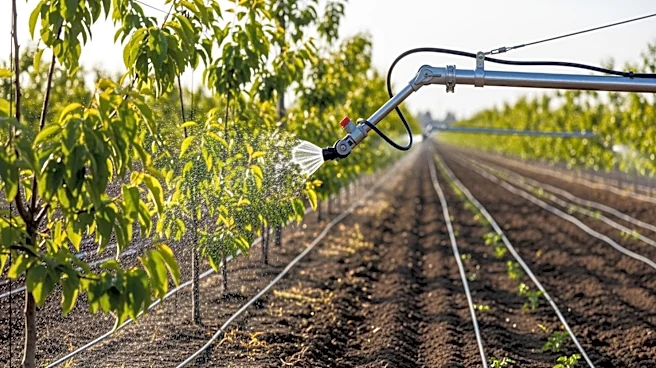
The introduction of this advanced irrigation technology is significant as it addresses the critical issue of water scarcity in agriculture. By enabling precise water application, the technology helps maintain healthy orchards and prevents the overuse of water resources. This is particularly important as water costs rise and groundwater regulations become stricter. The ability to efficiently manage water usage not only supports the sustainability of farming operations but also protects groundwater from pollution and reduces nutrient loss. This innovation represents a shift towards smarter farming practices that leverage robotics and data science to enhance productivity while conserving resources.
What's Next?
As this technology becomes more widely adopted, it could lead to significant changes in agricultural practices. Farmers may increasingly rely on such precision tools to manage their resources more effectively, potentially leading to broader implementation across different types of crops and farming environments. The success of this technology could also spur further research and development in precision agriculture, encouraging the integration of more advanced robotics and data analytics in farming. Stakeholders, including policymakers and agricultural organizations, may need to consider supporting these innovations through funding and regulatory frameworks to facilitate their adoption.