

What's Happening?
The United States military is facing a significant challenge in countering the use of inexpensive drones by Iran, which have become a staple in modern warfare. The conflict has seen Iran launch numerous drones across the region, some of which have successfully
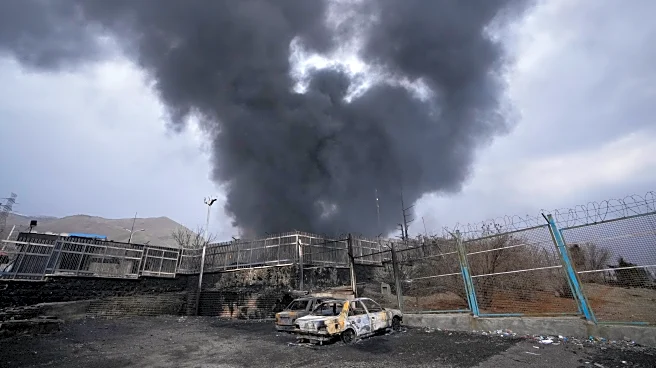
penetrated defenses, resulting in casualties, including the death of six U.S. soldiers in Kuwait. The U.S. military has been able to intercept the majority of these drones, but the high cost of using missiles to down these low-cost drones has prompted a shift in strategy. The military is now employing more cost-effective measures, such as attack helicopters and machine guns, to combat the drone threat. Additionally, the U.S. is integrating an anti-drone system, Merops, which has been effective against similar threats in Ukraine.
Why It's Important?
The adaptation of U.S. military strategies to counter Iran's drone capabilities is crucial for maintaining regional stability and protecting American and allied forces. The use of drones by Iran highlights a shift in warfare tactics, where low-cost, high-impact technologies can challenge traditional military defenses. This development underscores the need for the U.S. to innovate and implement more efficient defense mechanisms. The situation also emphasizes the importance of learning from conflicts like the one in Ukraine, where similar drone tactics have been employed. The ability to effectively counter these threats is vital for the U.S. to maintain its strategic advantage and ensure the safety of its personnel and allies in the Middle East.
What's Next?
The U.S. military is expected to continue refining its strategies and technologies to better counter the drone threat posed by Iran. This includes further development and deployment of systems like Merops and the Low-cost Uncrewed Combat Attack System (LUCAS). The military will likely increase collaboration with allies and leverage lessons learned from other conflicts to enhance its capabilities. Additionally, there may be increased focus on developing and deploying more cost-effective countermeasures to ensure that the U.S. can effectively neutralize drone threats without incurring prohibitive costs.
Beyond the Headlines
The ongoing conflict and the use of drones by Iran raise broader questions about the future of warfare and the ethical implications of using autonomous systems in combat. The reliance on drones and other unmanned systems could lead to changes in military doctrine and the way wars are fought, potentially reducing the need for human soldiers on the front lines. However, this also raises concerns about accountability and the potential for increased civilian casualties if these systems are not properly controlled. The situation highlights the need for international dialogue on the regulation and use of autonomous weapons in warfare.