


What's Happening?
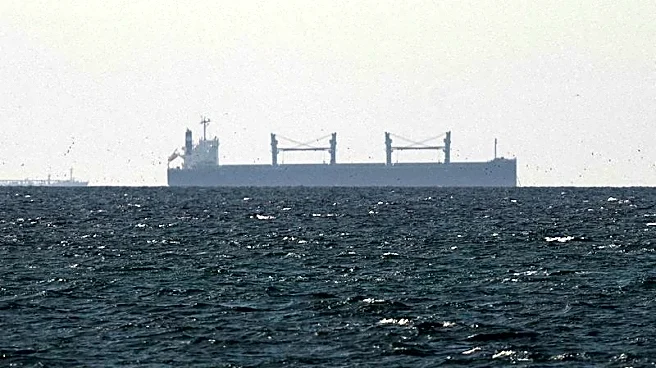
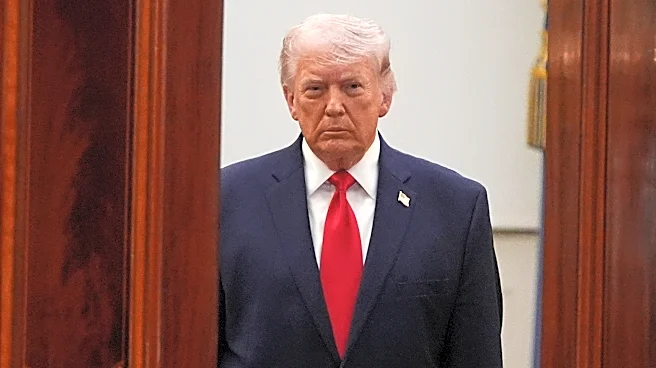
The U.S. dollar experienced a sharp rise following President Trump's announcement of more aggressive strikes on Iran, which disrupted hopes for a swift resolution to the conflict. In a televised speech, Trump indicated that these strikes would occur over
the next two to three weeks, without providing a concrete timeline for opening the Strait of Hormuz or ending the war. Iran's military responded with threats of more destructive attacks against the U.S. and Israel. The announcement led investors to seek safe-haven assets, causing oil prices to jump and stocks to tumble. The dollar index rose significantly, reflecting increased demand for the greenback amid market uncertainty.
Why It's Important?
President Trump's announcement has significant implications for global markets, particularly in terms of investor sentiment and asset allocation. The rise in the dollar and oil prices, coupled with falling stocks, indicates heightened market volatility and concerns over prolonged conflict. This situation could impact global economic growth and inflation, as disruptions in oil supply affect prices and trade. The uncertainty surrounding the conflict may lead to increased demand for safe-haven assets, influencing currency and commodity markets. Additionally, the potential for further escalation could affect geopolitical relations and international trade dynamics.
What's Next?
The market is closely watching for further developments in the U.S.-Iran conflict, with President Trump's planned strikes expected to influence investor behavior and market trends. The upcoming U.S. non-farm payrolls report may also impact market sentiment, as analysts anticipate a rise in jobs for March. Any deviation from expectations could exacerbate concerns about stagflation, adding to market volatility. Stakeholders, including investors and policymakers, will likely continue to monitor the situation closely, adjusting strategies in response to evolving geopolitical and economic conditions.