
What's Happening?
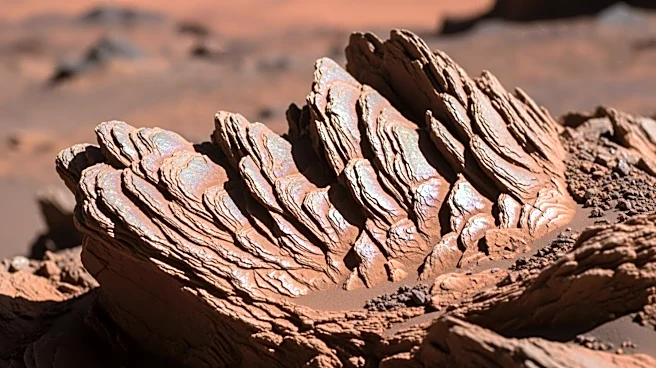
NASA's Curiosity rover has discovered a unique texture pattern on the surface of Mars, resembling reptilian scales, in a crater named Antofagasta. This pattern, referred to as 'honeycomb-shaped polygons'
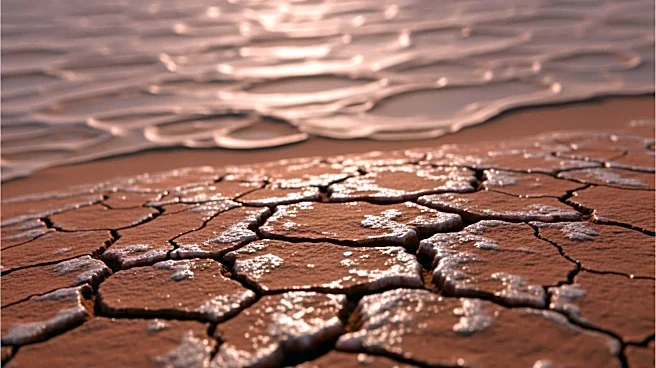
by Abigail Fraeman of NASA's Jet Propulsion Laboratory, is abundant and stretches across the ground extensively. The discovery, made on April 13, 2026, has scientists eager to understand the formation process of these patterns. Similar polygonal patterns on Earth typically form through repeated cycles of saturation and drying, or freezing and thawing. The presence of such patterns on Mars suggests a complex history of wet-dry weather cycling, which could provide insights into the planet's ancient climate.
Why It's Important?
The discovery of these 'dragon scale' rocks on Mars is significant as it adds to the growing body of evidence that Mars had a more complex water history than previously thought. Understanding the formation of these patterns could reveal details about Mars's ancient climate and its potential to have supported life. The findings may influence future Mars exploration missions and the search for signs of past life. Additionally, the study of these patterns can enhance our understanding of geological processes on other planets, contributing to the broader field of planetary science.
What's Next?
Scientists will analyze the data collected by Curiosity to determine the mineral composition of the rocks at Antofagasta and compare it with previous findings at Pontours. This analysis will help ascertain whether the two sites share similar geological histories. The results could provide further evidence of Mars's wet-dry weather cycles and inform future exploration strategies. Researchers will continue to monitor and study the site to uncover more about Mars's environmental history.