






What's Happening?
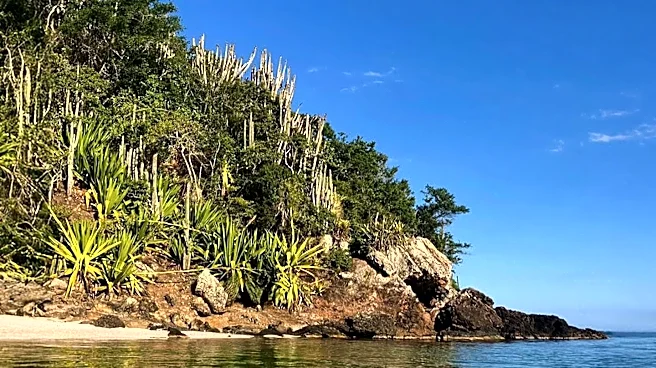
Ilha da Queimada Grande, known as Snake Island, is located off the coast of São Paulo, Brazil, and is home to two snake species: the critically endangered golden lancehead and the non-venomous Sauvage's snail-eating snake. The island's isolation has led
to the evolution of the golden lancehead, a highly specialized pit viper with venom potent enough to immobilize birds quickly. The island's snake population is estimated to be between 2,000 and 4,000, with nearly all being golden lanceheads. Public access to the island is prohibited to protect the snakes from illegal wildlife trafficking and habitat disturbance.
Why It's Important?
Snake Island serves as a unique natural laboratory for studying evolution and venom biology. The golden lancehead's adaptation to its isolated environment highlights the impact of geographic isolation on species development. The island's restricted access underscores the challenges of balancing conservation efforts with scientific research. Protecting the golden lancehead is crucial, as illegal wildlife trafficking poses a significant threat to its survival. The island's ecosystem, with its specialized snake species, offers valuable insights into biodiversity and the importance of preserving unique habitats.