










What's Happening?
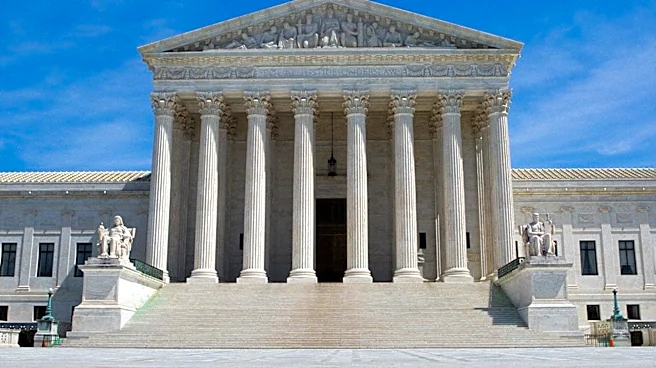
The concept of 'history and tradition' is gaining prominence in constitutional theory, particularly within the U.S. Supreme Court. This approach emphasizes the importance of historical practices and traditions in constitutional interpretation, as opposed
to abstract theories or moral readings. The debate within the Court, notably between Justices Kavanaugh and Barrett, highlights differing views on the role of history in constitutional law. Kavanaugh supports using history as a guide for interpretation, while Barrett distinguishes between originalism and tradition, questioning the independent authority of tradition. This methodological shift suggests a new form of constitutional pluralism that prioritizes backward-looking modalities.
Why It's Important?
The emphasis on history and tradition in constitutional interpretation has significant implications for U.S. legal and political landscapes. It reflects a conservative shift in the Supreme Court's approach, potentially affecting rulings on key issues like gun rights, abortion, and religious freedom. This method could lead to more stable and predictable legal outcomes by grounding decisions in long-standing practices. However, it also raises concerns about the exclusion of marginalized groups whose interests were historically overlooked. The debate over this approach underscores the ongoing tension between traditionalism and progressive legal theories, influencing future judicial decisions and public policy.