




What's Happening?
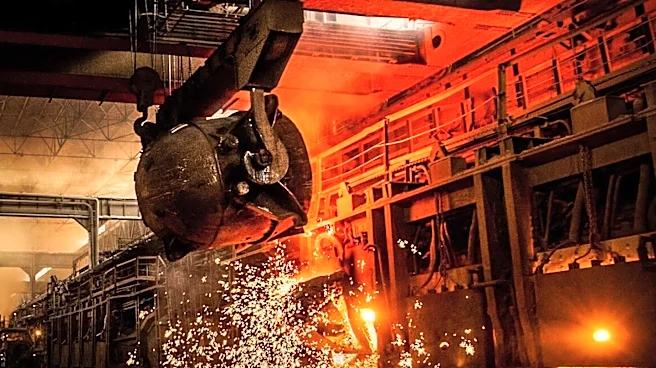
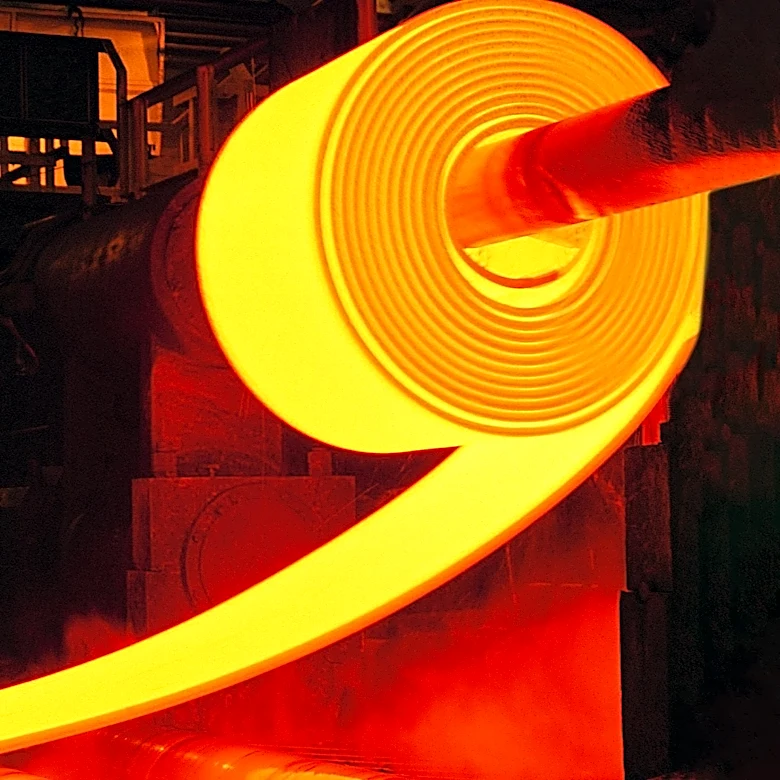
The Whyalla steelworks in South Australia is set to cut more than 500 jobs after its blast furnace repeatedly failed to operate, leading to a decision to abandon further revival efforts. This will reduce the workforce from 1,700 to approximately 1,200
employees across the steelworks, port, and associated mine, with an additional 100 labor hire workers also losing their jobs. South Australian Premier Peter Malinauskas stated that the 60-year-old blast furnace's 'days were numbered' and that the state and federal governments would provide a $10 million package for redundant workers, including support for re-skilling and training. The plant, which has been under administration since early last year, will now rely on stockpiles and externally sourced semi-finished steel products as it transitions to modern steelmaking technologies.
Why It's Important?
This development at the Whyalla steelworks underscores the global challenges faced by traditional heavy industries, particularly those reliant on aging, coal-fired infrastructure, in an era of increasing environmental scrutiny and technological advancement. For the U.S., this situation highlights the economic and social impact of industrial transitions, especially in regions heavily dependent on single industries. It serves as a case study for how the shift towards cleaner energy and modern manufacturing processes can lead to significant job displacement, necessitating robust government support for retraining and economic diversification. The move towards electric arc furnaces (EAFs) and green hydrogen-powered steel production, as mentioned in the context of Whyalla, reflects a broader trend that U.S. steel manufacturers are also navigating, impacting investment decisions, technological adoption, and workforce planning.
What's Next?
The Whyalla steelworks will now focus on transitioning to modern steelmaking technologies, with administrators hoping to sell the business without an operational blast furnace. This transition is expected to involve the installation of an electric arc furnace (EAF), which uses electricity, potentially from renewable sources, to produce steel with significantly lower emissions. The $2.4 billion support package from federal and state governments aims to keep the plant running, pay employees and creditors, upgrade infrastructure, and attract a new buyer. The immediate challenge will be managing the social impact of job losses and ensuring effective re-skilling programs for affected workers. The long-term goal is to establish a sustainable, modern steel production facility that aligns with global environmental standards.
Beyond the Headlines
The situation at Whyalla reflects a deeper global narrative about the decline of traditional industrial models and the imperative for sustainable economic transformation. The political debate surrounding the closure, with some attributing it to clean energy policies and others to underinvestment, highlights the complex interplay between economic policy, environmental goals, and industrial legacy. This case illustrates the tension between maintaining existing jobs in carbon-intensive industries and fostering new opportunities in green sectors. It also brings to light the ethical considerations of managing industrial decline in a way that supports affected communities and workers, rather than leaving them behind in the pursuit of environmental progress. The shift to EAFs and green hydrogen represents a significant technological and cultural shift for the steel industry worldwide.