




What's Happening?
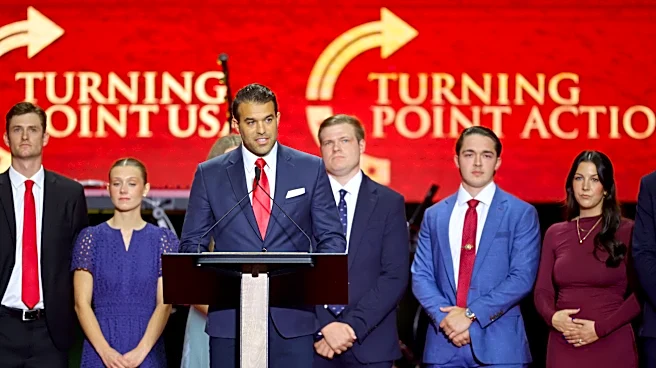
A post on Threads by 'secwar' commemorated Charlie Kirk, stating that his 'courage, conviction, and unwavering faith left a generational impact — and ignited a spiritual revival — inside our great Republic.' The post, made a year after his passing, expressed
that he is with his 'Lord and Savior, Jesus Christ.' This tribute garnered a wide range of reactions from other users on the platform. Some comments were supportive, echoing the sentiment of loss and respect for Kirk's perceived contributions. However, a significant portion of the responses were critical, with users expressing negative opinions about Kirk, labeling him with terms such as 'racist bastard,' 'racist asshole,' and a 'POS hustler.' Several comments also extended criticism to other figures, including Erika Kirk, Pete Hegseth, and President Trump, indicating a broader political and ideological divide among the commenters. The post itself highlights the polarizing nature of public figures and the strong opinions they evoke.
Why It's Important?
This event is important as it illustrates the highly polarized nature of public discourse in the U.S., particularly concerning political and media personalities. The strong, often vitriolic, reactions to the commemoration of Charlie Kirk underscore the deep ideological divisions present in society. For political organizations and public figures, such responses highlight the challenges of managing public perception and the intensity of both support and opposition they can face. The online environment, as demonstrated by the Threads comments, often amplifies these divisions, making it difficult to foster constructive dialogue. This polarization can impact political campaigns, public policy debates, and the overall social fabric, as differing viewpoints struggle to find common ground. The incident also reflects how the legacy of public figures is often contested, with their actions and beliefs interpreted vastly differently by various segments of the population.
What's Next?
Given the nature of social media and the ongoing political climate, similar polarizing discussions are likely to continue. Tributes or criticisms of public figures, especially those with strong political affiliations, will probably elicit comparable mixed reactions. Social media platforms may face ongoing challenges in moderating such content and managing the spread of both supportive and critical commentary. For organizations associated with figures like Charlie Kirk, they may continue to navigate public perception, potentially engaging in efforts to reinforce their narratives or address criticisms. The broader political landscape will likely see continued fragmentation, with online spaces serving as key arenas for these ideological battles. This incident serves as a microcosm of the larger societal trends of political and cultural division, suggesting that such dynamics will persist and evolve in online interactions.
Beyond the Headlines
The incident on Threads reveals deeper implications regarding the role of social media in shaping collective memory and public opinion. The immediate and often unfiltered reactions demonstrate how digital platforms can become battlegrounds for competing narratives about individuals and their legacies. This phenomenon can contribute to the 'echo chamber' effect, where individuals are primarily exposed to opinions that align with their own, further entrenching existing divisions. Ethically, the incident raises questions about the boundaries of free speech versus respectful discourse, and the responsibility of platforms to manage content that, while not necessarily illegal, can be deeply offensive to some users. Culturally, it reflects a broader trend of increased public engagement in political commentary, often characterized by strong emotional responses rather than nuanced debate. This continuous online contention can have long-term effects on social cohesion and the ability of different groups to understand or empathize with opposing viewpoints.