


What's Happening?
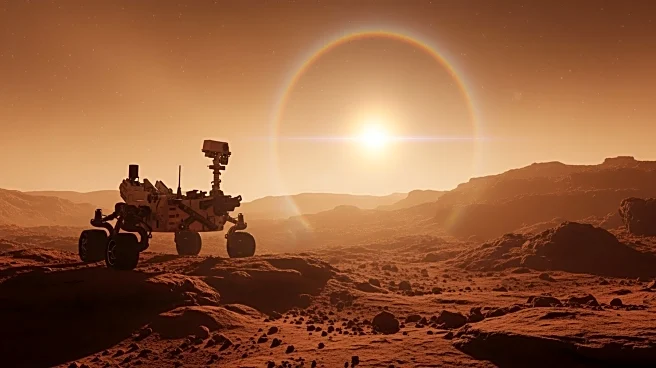
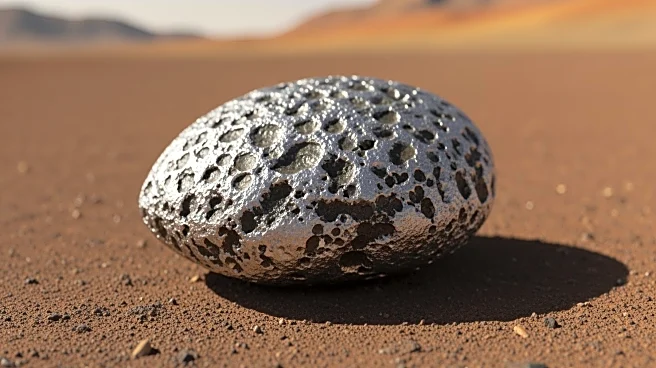
NASA's Perseverance rover has made a significant discovery on Mars by identifying a meteorite in the Jezero Crater. This marks the first time Perseverance has found a meteorite since its landing in February 2021. The rock, named Phippsaksla, was found to
contain high levels of iron and nickel, suggesting it may have originated from the core of a large asteroid elsewhere in the solar system. This discovery is crucial as it could provide insights into Mars' geological history and its interactions with space objects. The rover used its SuperCam to analyze the rock's composition, which is typically associated with iron-nickel meteorites.
Why It's Important?
The discovery of the meteorite by Perseverance is significant for several reasons. Meteorites like Phippsaksla can help scientists understand the effects of impacts on Mars and provide insights into the materials that existed in the early solar system. Since Mars lacks the protective atmosphere of Earth, meteorites are often preserved on its surface, offering a unique opportunity to study them. This finding could also help test theories about how Mars interacts with such objects, particularly the preservation of iron-based meteorites. Understanding these interactions is vital for piecing together the broader context of Mars' past, including its climate and potential for life-supporting conditions.
What's Next?
NASA is currently verifying the status of Phippsaksla as a meteorite. If confirmed, this discovery will add to the list of meteorites investigated by Mars rovers, providing further data for scientists to analyze. Perseverance's ongoing mission includes collecting samples from the Jezero Crater to search for signs of ancient life. The study of meteorites will continue to play a crucial role in understanding Mars' history and its capacity to preserve cosmic debris. Future analyses may reveal more about the conditions that existed on Mars billions of years ago and the planet's potential to support life.
Beyond the Headlines
Meteorites like Phippsaksla contain materials that date back to a time before the formation of our solar system, making them valuable tools for studying early solar system conditions. The preserved condition of meteorites on Mars could support hypotheses about their resistance to erosion. This discovery also highlights the importance of Mars exploration in understanding the broader solar system and the types of materials present during its early stages. As Perseverance continues its mission, it may uncover more meteorites, each offering unique insights into the planet's past and its interactions with space objects.