







What's Happening?
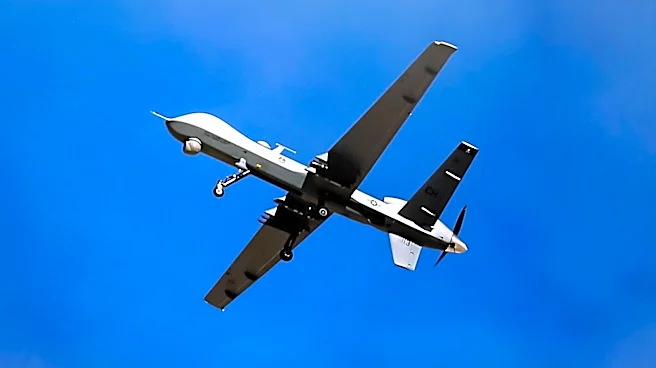
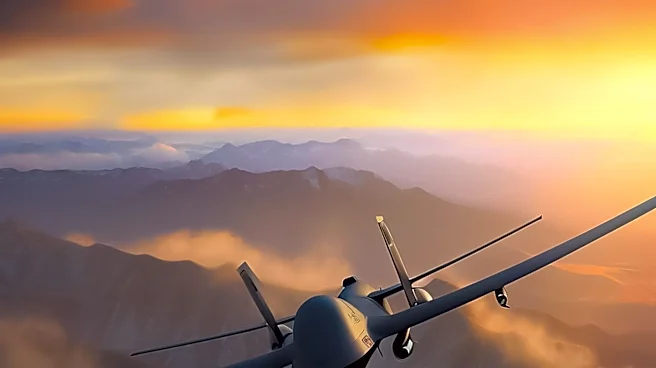
The 2nd Marine Regiment has conducted a test of AeroVironment's JUMP 20-X unmanned aerial system, marking the first time a Group 3 drone has been tested by a conventional Marine unit. The exercise took place in California, where contractors from AeroVironment operated
the drone due to a lack of trained Marine operators. The JUMP 20-X, capable of vertical take-off and landing, can fly for over 13 hours and cover a range of 115 miles. It was used to launch a Switchblade 300 Block 20 loitering munition more than 15 miles into the battlespace. The test aims to provide the regiment with a longer-range asset, enhancing its operational capabilities.
Why It's Important?
The testing of the JUMP 20-X drone by the Marine Corps highlights the increasing reliance on unmanned systems in military operations. The ability to deploy drones with extended range and endurance provides significant tactical advantages, allowing for more effective surveillance and precision strikes. However, the lack of trained operators underscores a critical gap in the military's current capabilities, which could hinder the full integration of such advanced systems. Addressing this shortage is essential for maximizing the potential of unmanned aerial systems and ensuring that military units can operate independently without relying on contractors.
What's Next?
The Marine Corps plans to address the shortage of trained Group 3 drone operators, although specific strategies have not been detailed. Further training exercises are expected to take place, potentially leading to the development of a dedicated training program for Marine operators. As the military continues to integrate unmanned systems into its operations, there may be increased investment in training and recruitment to build a skilled workforce capable of managing these advanced technologies.