






What's Happening?
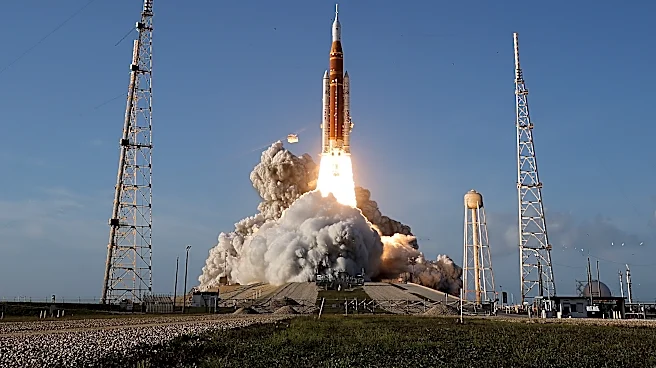
NASA's Artemis II mission has successfully launched from the Kennedy Space Center in Florida, marking the first time in over 50 years that astronauts are traveling around the moon. The mission, which began on April 1, 2026, involves a four-person crew
that includes American astronauts Victor Glover, Reid Wiseman, and Christina Koch, as well as Canadian astronaut Jeremy Hansen. The crew is set to travel more than 685,000 miles, surpassing the distance record set during the Apollo era. The mission aims to provide new perspectives on Earth and humanity, as well as prepare for future lunar and Martian exploration.
Why It's Important?
The Artemis II mission is significant as it represents a major step forward in human space exploration, rekindling interest in lunar missions and setting the stage for future endeavors to Mars. The mission not only aims to expand scientific knowledge but also serves as a symbol of international collaboration and unity, with astronauts from different backgrounds working together. The mission's success could lead to advancements in technology and science, potentially benefiting various sectors such as aerospace, engineering, and international relations.
What's Next?
Following the completion of the Artemis II mission, NASA plans to analyze the data collected to inform future missions, including the Artemis III mission, which aims to land astronauts on the lunar surface. The success of Artemis II could accelerate plans for establishing a sustainable human presence on the moon and pave the way for manned missions to Mars. Stakeholders, including government agencies, private companies, and international partners, are likely to continue collaborating to achieve these ambitious goals.