



What's Happening?
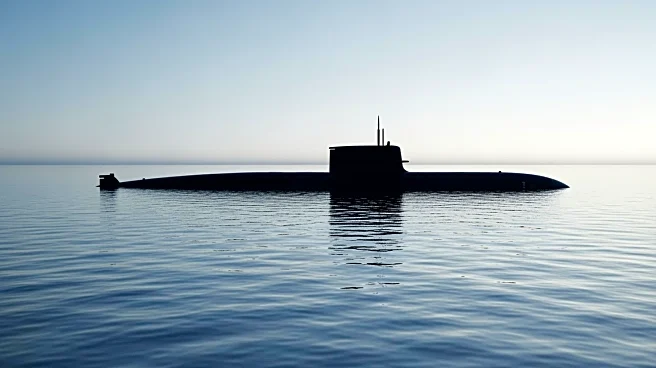
The Japan Maritime Self-Defense Force (JMSDF) has decommissioned the submarine SS-592 Uzushio, marking the retirement of the third Oyashio-class submarine after 25 years of service. The decommissioning ceremony took place in Yokosuka, presided over by
Vice Admiral Koji Yagi, Commander of the Yokosuka Naval District. The Oyashio-class, originally composed of eleven units, has been gradually phased out as newer classes like the Sōryū and Taigei are introduced. The Uzushio, which played a significant role in Japan's maritime defense, was praised for its service and the training it provided to numerous crew members. The JMSDF continues to operate one of the largest and most advanced conventionally powered submarine fleets globally, with ongoing advancements in its submarine capabilities.
Why It's Important?
The decommissioning of the Oyashio-class submarine reflects Japan's strategic shift towards more advanced maritime defense capabilities. As the JMSDF transitions to newer submarine classes, it underscores Japan's commitment to maintaining a robust and modern naval force. This move is significant in the context of regional security dynamics in the Pacific, where maritime power plays a crucial role. The retirement of older submarines like the Uzushio allows for the allocation of resources to newer, more capable vessels, enhancing Japan's defensive posture. This development is also indicative of Japan's broader defense strategy, which involves continuous modernization to address evolving security challenges.
What's Next?
As the JMSDF continues to induct newer Taigei-class submarines, further decommissioning of older Oyashio-class units is expected. Some of these submarines may transition to training roles, while others will be retired. The ongoing modernization of Japan's submarine fleet is likely to influence regional maritime security dynamics, potentially prompting responses from neighboring countries. The JMSDF's focus on advanced submarine capabilities will continue to play a critical role in Japan's defense strategy, particularly in safeguarding its maritime interests and maintaining stability in the Pacific region.