







What's Happening?
Nepal's government is moving to amend the Safe Motherhood and Reproductive Health Rights Act, 2018, to significantly extend paid parental leave. The proposed changes would grant women in government, non-governmental, and private organizations six months
of paid leave before or after childbirth, a substantial increase from the current 98 days. Additionally, male employees would receive 42 days of paid paternity leave, up from 15 days. Health and Food Hygiene Minister Nisha Mehta stated that this initiative aims to encourage population growth, as Nepal's latest national census indicates a continuous downward trend in its population growth rate, falling below one percent for the first time in eight decades. The government views this extension not merely as an employment benefit but as an investment in human capital, maternal health, and the well-being of mothers and newborns, crucial for the country's future workforce.
Why It's Important?
This policy shift marks a significant departure from Nepal's historical approach to population, which for decades focused on control and smaller families. The declining population growth rate, now at 0.92 percent, has prompted concerns about the country's future workforce and economic stability. By incentivizing births through extended parental leave, Nepal hopes to stabilize or reverse this demographic trend. The move reflects a broader global challenge faced by many nations with declining fertility rates, where governments are exploring various measures, including financial incentives and enhanced parental support, to encourage larger families. The success of this policy could provide a model for other developing nations grappling with similar demographic shifts, highlighting the potential for government intervention to influence family planning decisions and long-term societal development.
What's Next?
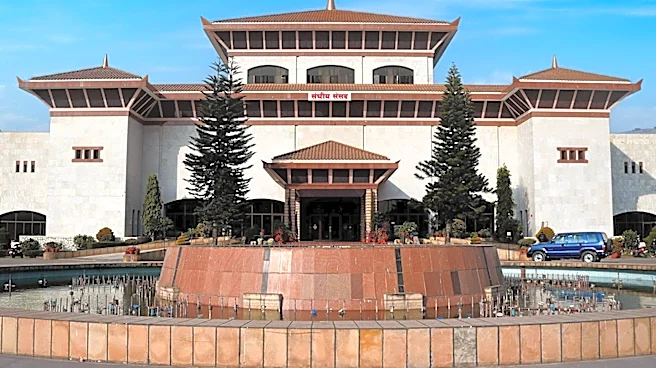
The proposed amendment to the Safe Motherhood and Reproductive Health Rights Act is currently registered in the House of Representatives and awaits passage. If approved, the extended parental leave provisions will come into effect, impacting employees across various sectors. The government anticipates that these incentives, alongside other potential measures, will contribute to an increase in the population growth rate. However, experts like Dr. Yogendra Bahadur Gurung, a professor of population studies, caution that reversing long-term demographic declines is challenging, and while incentives may help stabilize the rate, a significant reversal is difficult. The National Statistics Office projects Nepal's fertility rate to range between 1.13 and 2.1 over the next 15 years, with the total population potentially reaching 33.5 million within 25 years. The effectiveness of this policy will be closely monitored to assess its impact on birth rates and the broader demographic landscape.
Beyond the Headlines
The shift in Nepal's population policy from control to growth reflects a complex interplay of social, economic, and cultural factors. Historically, Nepal, influenced by international thinking, pursued aggressive population control measures, associating smaller families with development. This new direction acknowledges that population trends are shaped by more than just government incentives, including societal changes like later marriages and fewer children. The debate extends beyond mere numbers, touching upon reproductive rights, gender equality, public health, and economic opportunity. The ethical dimension of government intervention in family planning decisions is also prominent, with some experts arguing against manipulative policies. The success of this policy will depend not only on its ability to increase birth rates but also on its broader impact on the well-being of families and the country's long-term human capital development, prompting a re-evaluation of what constitutes an 'ideal' population for a nation.