







What's Happening?
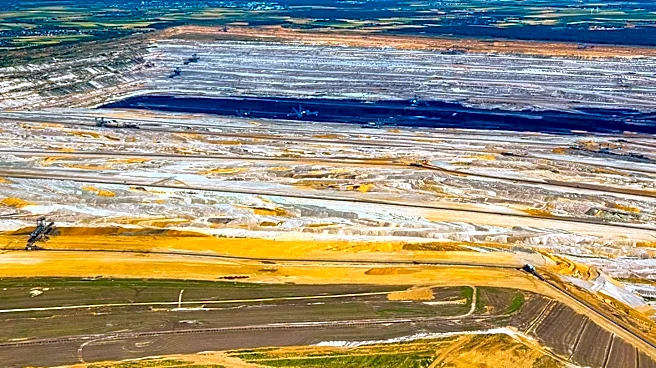
China is significantly expanding its coal-to-gas (CTG) industry, with production capacity expected to nearly triple from 9.4 billion cubic meters (Bcm) in 2026 to 28 Bcm by 2030. This expansion is part of China's strategy to enhance energy security by reducing
reliance on imported liquefied natural gas (LNG). The CTG industry, primarily located in Xinjiang, benefits from low-cost coal, making it a competitive alternative to imported LNG. The Chinese government is supporting this growth while imposing environmental requirements on new projects. The expansion is expected to affect global LNG demand, particularly impacting exporters from countries like the U.S., Australia, and Qatar.
Why It's Important?
The expansion of China's CTG industry is poised to alter the dynamics of the global LNG market. By increasing domestic gas production, China aims to reduce its dependency on foreign LNG, which could lead to decreased demand and potentially lower prices on the global market. This shift poses a challenge to major LNG exporters who rely on China as a key market. Additionally, China's focus on energy security through domestic production highlights the geopolitical implications of energy independence, as it seeks to insulate itself from international supply chain disruptions.
What's Next?
As China's CTG capacity grows, LNG exporters will need to reassess their market strategies and possibly seek alternative markets to offset potential declines in Chinese demand. The environmental impact of CTG production, including carbon emissions and water usage, will also be closely monitored, potentially influencing future regulatory measures. The global energy market will need to adapt to these changes, with stakeholders considering the long-term implications of China's energy policies.