








What's Happening?
The United Nations Environment Programme Finance Initiative (UNEP FI) has released a white paper titled 'Lost in Translation: Unlocking adaptation finance through better information flows,' which identifies critical information gaps preventing private
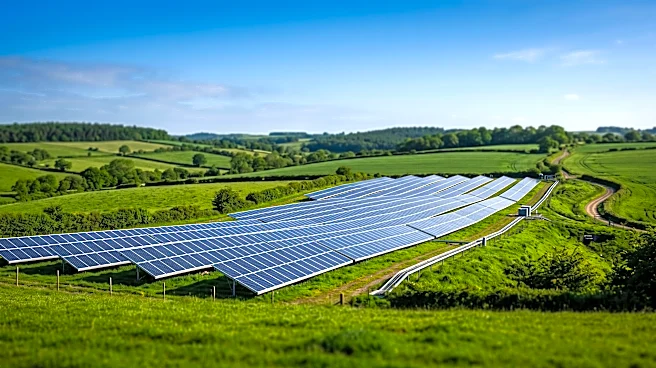
capital from reaching climate adaptation efforts in developing countries. The report indicates that while private capital is available for climate investment, it is not adequately flowing into adaptation projects. Developing nations are projected to require between US$310–365 billion annually by 2035 for adaptation, yet international public adaptation finance only amounted to US$26 billion in 2023, with private sources contributing a mere 3–8%. The paper, developed with input from the Community of Practice on Impact Measurement and Information Flows, pinpoints four key types of information crucial for making adaptation financeable: physical climate risk, allocation of finance, adaptation impact, and financial performance. It argues that financial institutions struggle to translate national adaptation priorities into assessable, priceable, and defensible financial propositions.
Why It's Important?
This report is crucial for U.S. and international stakeholders involved in climate finance and development. The significant disparity between the required adaptation finance and the actual funding highlights a systemic failure in channeling capital to where it is most needed. For the U.S., as a major global economic player and contributor to climate initiatives, understanding these information gaps is vital for optimizing its foreign aid and investment strategies. The lack of clear reference points and common frameworks for measuring adaptation impact creates uncertainty for investors, hindering private sector engagement. Addressing these issues could unlock substantial private capital, accelerating climate resilience efforts in vulnerable nations and potentially mitigating future humanitarian and economic crises that could have global repercussions. Improved information flows would also enhance transparency and accountability in climate finance, benefiting both investors and recipient countries.
What's Next?
The 'Lost in Translation: Policy Brief,' accompanying the white paper, is directed at governments, public and development financiers, and GEF Agencies, outlining four areas for consideration. These include supporting improvements in the availability and quality of physical climate risk data, providing financial institutions with clear reference points for allocating adaptation finance, establishing common frameworks for measuring adaptation impact, and utilizing public and development finance to build evidence on financial performance. These recommendations suggest a phased approach, with short-, medium-, and longer-term actions. The implementation of these measures will require collaborative efforts between international organizations, national governments, and financial institutions to standardize data, develop robust metrics, and create an enabling environment for private investment in adaptation. The white paper complements existing resources like the Adaptation Finance Taxonomy Playbook and the Adaptation and Resilience Impact Measurement Toolkit, indicating ongoing efforts to build a comprehensive knowledge platform for climate adaptation.
Beyond the Headlines
The challenges in unlocking adaptation finance extend beyond mere informational gaps; they touch upon fundamental issues of risk perception, valuation, and the long-term investment horizons often required for climate resilience projects. The report implicitly highlights the ethical imperative for developed nations to support developing countries, which often bear the brunt of climate change impacts despite contributing less to its causes. Culturally, it underscores the need for a global shift in financial paradigms, moving towards valuing long-term sustainability and resilience alongside traditional profit motives. Legally, the establishment of common frameworks for impact measurement could pave the way for international standards and potentially new forms of climate finance regulation. This development could also influence corporate social responsibility frameworks, pushing companies to integrate climate adaptation into their investment strategies more robustly. The deeper implication is that without effective mechanisms to finance adaptation, the global community risks exacerbating inequalities and undermining broader sustainable development goals.