





What's Happening?
Canada is developing a new micro-satellite mission named POET (Photometric Observations of Exoplanet Transits) aimed at discovering Earth-sized and super-Earth exoplanets. The mission will focus on stars smaller and cooler than the sun, known as ultracool
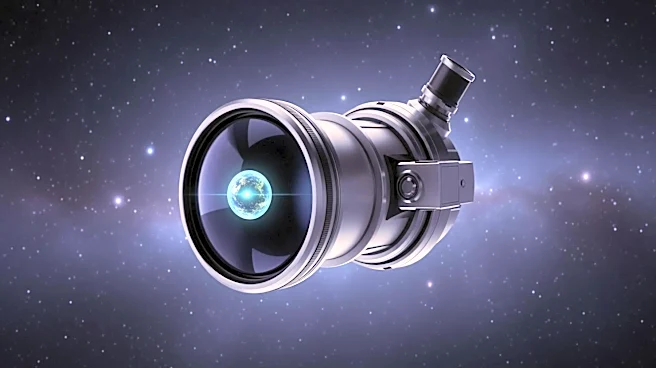
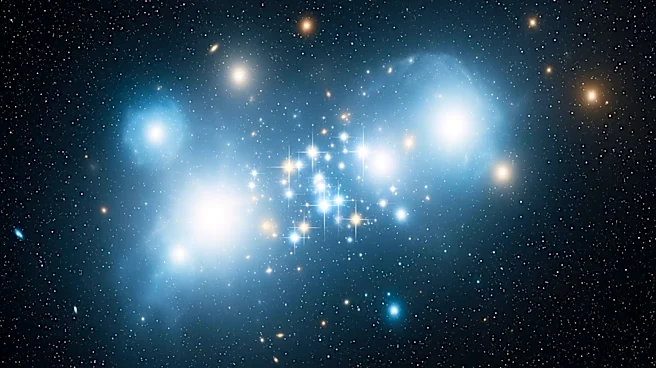
dwarfs, which include K-type, M-type, and brown dwarf stars. These stars are significantly smaller than the sun, making the detection of transiting exoplanets easier due to a larger planet-to-star size ratio. POET will utilize a 20-cm telescope capable of imaging in near-ultraviolet, visible near-infrared, and short-wavelength infrared. The mission builds on previous Canadian space missions, MOST and NEOSSat, and is expected to launch in 2029. Researchers have narrowed down potential targets to 100-300 ultracool dwarfs within 100 parsecs from Earth, with the goal of identifying exoplanets with orbital periods between 7-50 days.
Why It's Important?
The POET mission represents a significant advancement in the search for Earth-like exoplanets, which are crucial for understanding the potential for life beyond our solar system. By focusing on ultracool dwarfs, POET could identify planets in habitable zones, making them prime candidates for further study with telescopes like the Webb Space Telescope. The mission's success could lead to the discovery of new Earth analogues, providing valuable targets for atmospheric characterization and biosignature gas searches. This could have profound implications for astrobiology and the search for extraterrestrial life, potentially reshaping our understanding of the universe.
What's Next?
Following the launch of POET in 2029, the mission will conduct a year-long survey of selected ultracool dwarfs to identify Earth-sized exoplanets. The findings could guide future missions and observations, particularly in the search for biosignatures. The success of POET could also influence the design and objectives of subsequent space missions, potentially leading to more focused efforts on studying exoplanets around ultracool dwarfs. Additionally, the data collected could enhance our understanding of planetary formation and the conditions necessary for life.