
What's Happening?
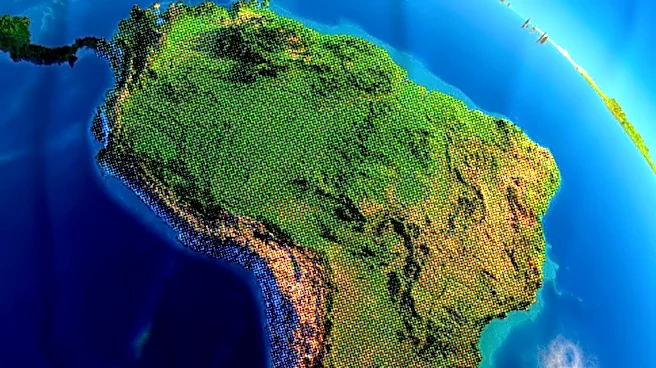
A magnitude 3.9 earthquake was recorded in the early hours of August 5, 2026, in Carchi, a province in northern Ecuador bordering Colombia. The earthquake's epicenter was located approximately 3.3 kilometers from San Gabriel, at a depth of about six kilometers.
The seismic event was reported by the Instituto Geofísico de la Escuela Politécnica Nacional (IG-EPN) and was felt by residents across various parts of the province. Despite the tremor, no injuries or material damages have been reported by authorities. The region is part of the Pacific Ring of Fire, known for its high seismic and volcanic activity due to tectonic plate interactions.
Why It's Important?
The occurrence of earthquakes in Ecuador is a reminder of the country's vulnerability due to its location on the Pacific Ring of Fire, a major area in the basin of the Pacific Ocean where many earthquakes and volcanic eruptions occur. This seismic activity can have significant implications for local communities, infrastructure, and emergency preparedness. While this particular earthquake did not result in damage, it underscores the importance of continuous monitoring and readiness to respond to potential future seismic events. The IG-EPN plays a crucial role in providing timely information and ensuring public safety through its monitoring efforts.
What's Next?
Authorities and relevant organizations will continue to monitor the region for any aftershocks or further seismic activity. The IG-EPN will likely maintain its vigilance in tracking seismic events and providing updates to the public. Residents in the affected areas may be encouraged to review and update their emergency preparedness plans. Additionally, this event may prompt discussions on improving infrastructure resilience and emergency response strategies in earthquake-prone regions.
Beyond the Headlines
The frequent seismic activity in Ecuador highlights the broader geological dynamics at play in the Pacific Ring of Fire. This region's tectonic activity is a natural phenomenon that can have profound impacts on human settlements and the environment. Understanding these processes is essential for developing effective risk mitigation strategies and enhancing community resilience. The event also serves as a reminder of the interconnectedness of natural systems and the need for international cooperation in monitoring and responding to seismic hazards.