






What's Happening?
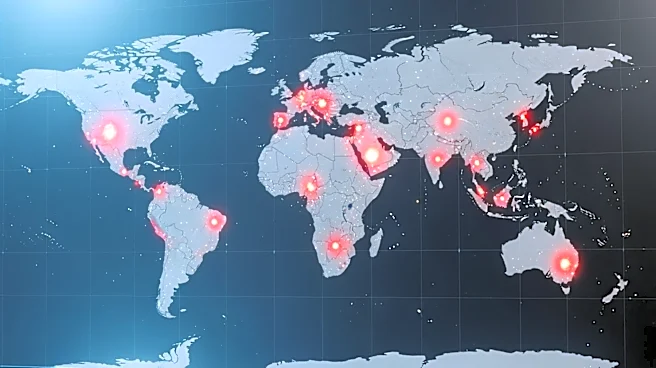
A new global disease outbreak map has identified approximately 9.3% of the world's land area as highly vulnerable to dangerous disease outbreaks. The research, led by Angela Fanelli from the European Commission’s Joint Research Centre, utilized machine
learning and satellite data to map epidemic-prone diseases across nearly every country. The study highlights that regions in Latin America and Oceania are particularly at risk, exacerbated by climate change and land development. The map focuses on zoonotic diseases, which are transmitted from animals to humans, and emphasizes the role of human-driven environmental changes in increasing epidemic risks. The study also notes that population density is a significant driver of outbreak risk.
Why It's Important?
The findings of this study are crucial as they highlight regions that are not only at high risk for disease outbreaks but also lack the necessary health infrastructure to respond effectively. This has significant implications for global health security, as outbreaks in these regions could quickly spread internationally due to modern travel. The study underscores the need for improved global cooperation in disease surveillance and response, as well as the importance of addressing environmental factors that contribute to disease spread. High-income countries, with their strong health systems, could play a pivotal role in supporting vulnerable regions through laboratory support and vaccine manufacturing.
What's Next?
The study suggests that predictive models can be used to anticipate where future outbreaks might occur, allowing for targeted surveillance and preparedness efforts. This proactive approach could help mitigate the impact of potential outbreaks by ensuring that resources are allocated efficiently and that vulnerable regions receive the support they need before an outbreak becomes widespread. The research also calls for continued global cooperation in monitoring and responding to emerging infectious diseases, emphasizing the importance of flexible preparedness plans that can adapt to new threats.