


What's Happening?
The recent military strikes by the U.S. and Israel on Iran have heightened concerns about potential disruptions in the global oil supply. Despite ongoing sanctions, Iran remains a significant oil exporter, managing to export approximately 1.9 million
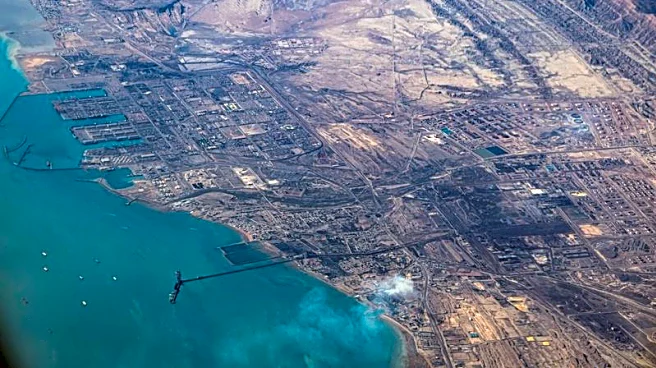
barrels per day. The primary concern is Iran's control over the Strait of Hormuz, a critical shipping route through which about 20% of the world's oil demand passes daily. If Iran were to close the Strait, it could lead to immediate and dramatic increases in global oil prices. The current oversupply of oil has helped stabilize prices despite these tensions. However, the potential for Iran to retaliate against neighboring oil-producing countries in the Gulf remains a significant risk.
Why It's Important?
The situation poses a substantial risk to global oil markets and the broader economy. The Strait of Hormuz is a vital artery for oil exports from major producers like Saudi Arabia and Iraq. Any disruption could lead to significant price spikes, affecting global energy markets and potentially leading to economic instability. The U.S. has increased sanctions enforcement on Iran's 'shadow ships' to curb its oil exports, but the geopolitical tensions could escalate further. The potential for Iran to target Gulf oil facilities could exacerbate the situation, leading to broader regional instability and impacting global energy security.
What's Next?
The global oil market is closely monitoring the situation, with potential responses from major stakeholders being critical. If Iran retaliates by targeting Gulf oil facilities, it could lead to a severe crisis in the oil market. The U.S. and its allies may need to consider strategic responses, including diplomatic efforts to de-escalate tensions or military measures to ensure the security of oil shipping routes. The opening of trading markets will provide a clearer picture of the immediate impact on oil prices, and further developments in the region will be pivotal in determining the next steps.