


What's Happening?
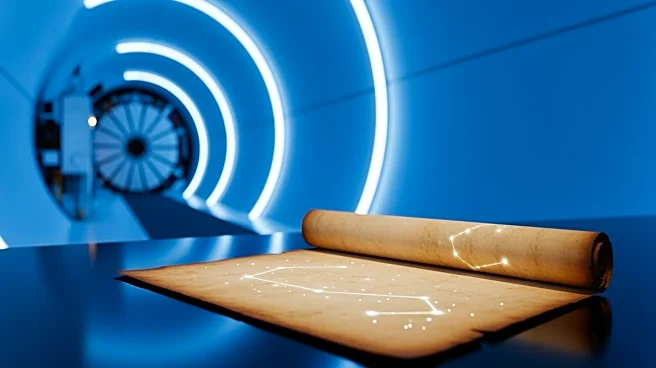
Researchers at the SLAC National Accelerator Laboratory have successfully used a particle accelerator to decode a lost ancient Greek star catalog. This catalog, attributed to the astronomer Hipparchus, represents one of the earliest known attempts to systematically
log the stars. The team employed synchrotron radiation, a type of X-ray beam, to reveal the hidden markings on ancient parchment that had been overwritten. This discovery sheds light on the early history of astronomy and provides insights into the methods used by ancient astronomers to map the night sky.
Why It's Important?
The recovery of Hipparchus's star catalog is significant for both historical and scientific communities. It offers a rare glimpse into the early methodologies of astronomical observation and documentation, highlighting the advanced understanding of the cosmos by ancient civilizations. This discovery not only enriches the historical narrative of astronomy but also underscores the potential of modern technology to uncover and preserve ancient knowledge. The findings could inspire further research into other lost works and contribute to a deeper understanding of the development of scientific thought.