








What's Happening?
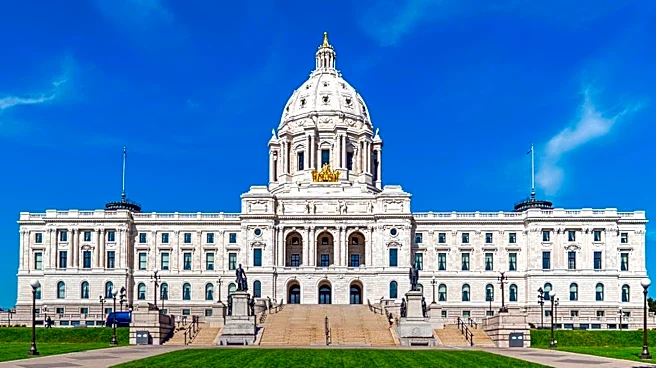
A federal judge has temporarily blocked Minnesota's ban on prediction markets, which was set to take effect on August 1, 2026. The law, passed with bipartisan support, aimed to make it a felony to host or advertise prediction markets in the state, citing
potential addiction and economic harm to tribal nations. The ban is the first of its kind in the U.S. However, the federal Commodities Futures Trading Commission (CFTC), along with platforms Kalshi and Polymarket, filed a lawsuit against the state, arguing that the Commodity Exchange Act grants the CFTC exclusive jurisdiction over these markets. Judge Katherine Menendez issued a preliminary injunction, stating that the plaintiffs have shown a likelihood of success on the merits and a threat of irreparable harm. The injunction prevents the enforcement of the ban while the lawsuit is ongoing.
Why It's Important?
The ruling highlights the ongoing debate over state versus federal jurisdiction in regulating prediction markets. These markets allow betting on real-world outcomes, such as political events and sports, and are seen by some as unregulated gambling sites. The decision to block the ban could set a precedent for other states considering similar legislation. It also underscores the tension between state efforts to regulate gambling and federal oversight of financial markets. The outcome of this case could impact the future of prediction markets in the U.S., potentially affecting stakeholders in the gambling and financial sectors.
What's Next?
The legal battle is expected to continue as Minnesota lawmakers and the CFTC present their arguments. The state may appeal the injunction, and the case could eventually reach higher courts. Meanwhile, other states observing the case may reconsider their stance on prediction markets. The decision could influence future legislation and regulatory approaches across the country. Stakeholders, including tribal nations and gambling platforms, will be closely monitoring the developments, as the case could have significant economic and regulatory implications.