

What's Happening?
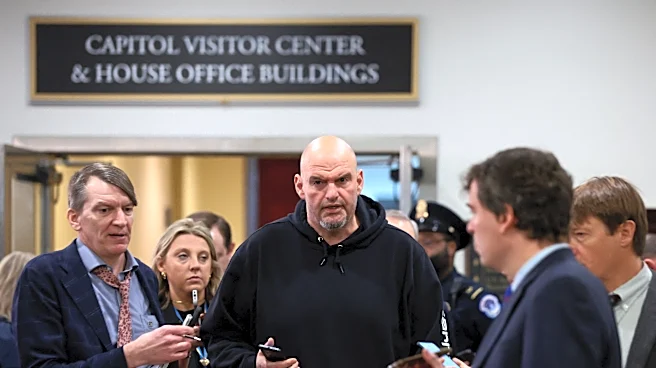
Senator John Fetterman, a first-term Democrat from Pennsylvania, has publicly addressed accusations from former aides regarding his alleged indifference to his work and frequent absence from constituent meetings. Fetterman dismissed these claims as 'smears'
from 'disgruntled staffers' aimed at damaging his reputation. The controversy arose after The Wall Street Journal published text messages and accounts from former staff members suggesting Fetterman prioritizes engaging with conservative media over his senatorial duties. Fetterman responded to specific allegations, including a text where he questioned meeting with Children's Hospital of Philadelphia officials, calling it a 'dumb joke' for which he apologized. He also clarified his absence from a police officers' funeral and a meeting with paralyzed veterans, attributing the former to private condolences and the latter to illness.
Why It's Important?
These allegations and Senator Fetterman's response highlight the challenges faced by public officials in managing staff relations and public perception, especially amidst political scrutiny. The claims of indifference to constituent needs and legislative work, if widely believed, could erode public trust and impact Fetterman's effectiveness as a senator. His engagement with conservative media, while potentially broadening his appeal, has also drawn criticism from within his own party, particularly concerning his stances on issues like Israel, Iran, and immigration. This internal party friction, coupled with sagging approval ratings, could complicate his potential re-election bid in 2028. The situation also underscores the impact of staff leaks and anonymous accounts on a politician's career, forcing public figures to defend their conduct and priorities.
What's Next?
The anonymous account created by former Fetterman staffers on X, threatening to release further unflattering details, suggests that this issue may continue to unfold. Senator Fetterman will likely need to continue to address these allegations and demonstrate his commitment to his senatorial duties and constituents to counter the negative narrative. His political future, including a potential re-election campaign in 2028, will depend on his ability to regain trust and unify support within his party, while also navigating his independent political positions. The ongoing scrutiny could also prompt a re-evaluation of staff management and communication strategies within his office. The situation may also influence how other politicians handle staff relations and public image in an increasingly polarized political environment.
Beyond the Headlines
This incident delves into the complex dynamics of political leadership, mental health, and public service. Senator Fetterman has been open about his past struggles with depression, having been hospitalized for six weeks in 2023. While he attributes some of the current criticisms to 'disgruntled staffers,' the recurring nature of such reports, as noted by Adam Jentleson, his former chief of staff, raises questions about the systemic challenges within his office. The tension between a politician's personal well-being and the demanding nature of public office is a significant, often overlooked, aspect of political life. This situation also highlights the ethical considerations surrounding staff loyalty, confidentiality, and the use of anonymous sources in political reporting, underscoring the broader implications for transparency and accountability in government.