
What's Happening?
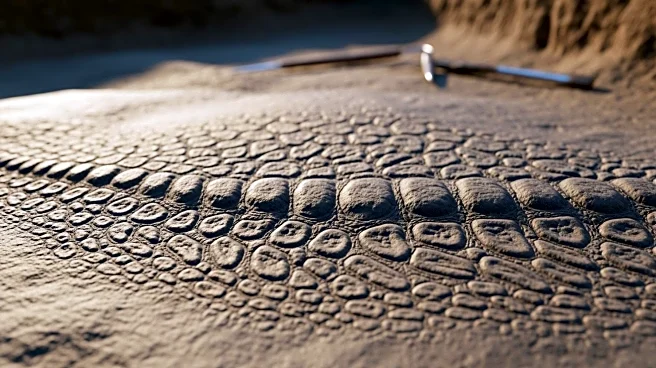
Paleontologists in China have unearthed a nearly complete skeleton of a new species of iguanodontian dinosaur, named Haolong dongi, from the Early Cretaceous period. This discovery is notable for the exceptional
preservation of the dinosaur's skin, which includes unique structures not previously observed in other non-avian dinosaur fossils. The fossilized skin features overlapping scales on the tail and distinct tuberculate scales on the neck and thorax, along with hollow, cylindrical cutaneous spikes. These spikes are composed of a cornified outer layer and a multi-layered epidermis, suggesting an independent evolutionary origin distinct from protofeathers and modern lizard spines. The spikes likely served as a deterrent against predators and may have had roles in thermoregulation or sensory perception.
Why It's Important?
The discovery of Haolong dongi provides unprecedented insight into the microanatomy of non-avian dinosaur skin, highlighting the complexity of skin evolution in ornithischian dinosaurs. This finding contributes to the understanding of the diversity and evolutionary adaptations of iguanodontians, a group that dominated herbivorous dinosaur populations during the Cretaceous period. The unique skin structures of Haolong dongi offer new perspectives on the evolutionary pathways that led to the development of various integumentary features in dinosaurs, which could have implications for understanding the evolutionary history of modern reptiles and birds.