



What's Happening?
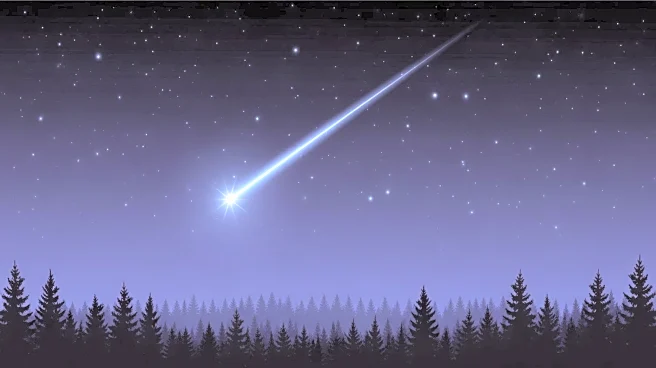
The Ursid meteor shower, the final meteor event of 2025, is set to peak on the night of December 21 into the early morning of December 22. This celestial event offers a chance to see up to 24 meteors per hour, although the average is typically between
five to ten meteors per hour, according to NASA's Jet Propulsion Lab. The meteor shower will continue to be visible until December 26, providing an opportunity for holiday stargazing. The best viewing conditions are expected in areas with clear skies, particularly from the Southwest to the Carolinas, as reported by Weather.com. The Ursids originate from the debris of Comet 8P/Tuttle, which orbits the sun every 13.5 years. As Earth passes through this debris field, the particles burn up in the atmosphere, creating the visible meteors.
Why It's Important?
The Ursid meteor shower provides a unique opportunity for people to engage with astronomy and appreciate natural phenomena during the holiday season. It serves as a reminder of the vastness and beauty of the universe, potentially inspiring interest in science and space exploration. For communities and individuals, such events can foster a sense of wonder and curiosity, encouraging educational activities and discussions about space. Additionally, meteor showers like the Ursids can boost local tourism in areas with optimal viewing conditions, as enthusiasts travel to witness the spectacle.
What's Next?
Following the Ursid meteor shower, the next major meteor event will be the Quadrantids, which are expected to peak in early January 2026. Stargazers and astronomy enthusiasts can look forward to this event, which is known for its potential to produce a high number of meteors per hour. As with the Ursids, clear skies and minimal light pollution will be crucial for optimal viewing. Communities and organizations may plan events or gatherings to observe these celestial displays, further promoting interest in astronomy.