




What's Happening?
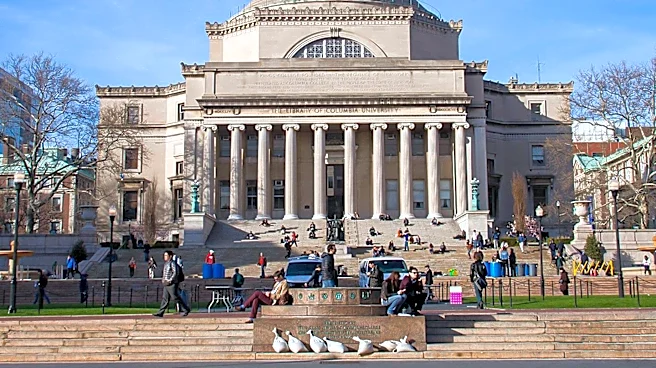
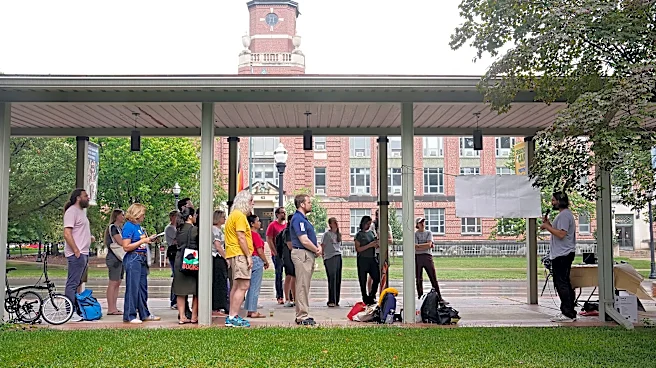
As the fall semester commences at Columbia University, students are actively pushing for the reopening of a specific campus walkway. This particular walkway was previously the site of significant campus protests and arrests related to the Israel-Hamas
conflict. The renewed push coincides with the first day of classes, indicating a desire among students to restore full access to campus areas that were restricted due to earlier demonstrations. The situation highlights ongoing tensions and the impact of past events on current campus life and student mobility within the university grounds. NBC New York's Melissa Colorado reported on this development.
Why It's Important?
The student advocacy for reopening the campus walkway at Columbia University is important as it reflects the ongoing efforts to normalize campus life following periods of significant unrest and protest. The closure of such areas, even if temporary, can impact student movement, access to facilities, and the overall campus experience. For a major educational institution like Columbia, maintaining an open and accessible campus environment is crucial for fostering academic and social engagement. The protests and subsequent arrests underscore the broader societal divisions and their manifestation within university settings, making the reopening of the walkway a symbolic step towards healing and reintegration for the student body. It also highlights the balance universities must strike between ensuring safety and upholding freedom of expression.
What's Next?
The immediate next steps will likely involve continued dialogue between Columbia University administration and student representatives regarding the reopening of the walkway. Students may organize further peaceful demonstrations or petitions to amplify their demands. The university will need to assess the security implications and any potential for renewed unrest before making a decision. This situation could also set a precedent for how other universities handle campus access and student protests in the future, especially concerning sensitive geopolitical issues. The administration's response will be closely watched by the student body, faculty, and potentially other academic institutions facing similar challenges.
Beyond the Headlines
Beyond the immediate issue of campus access, this situation at Columbia University touches upon deeper themes of free speech, campus governance, and the role of universities as forums for debate and dissent. The closure of the walkway, stemming from protests related to the Israel-Hamas war, reflects the increasing politicization of university campuses and the challenges administrators face in managing diverse and often conflicting viewpoints. It also raises questions about the balance between maintaining order and protecting students' rights to protest. The long-term implications could include a re-evaluation of campus security policies, student conduct guidelines, and strategies for fostering inclusive dialogue on contentious global issues within academic environments.