







What's Happening?
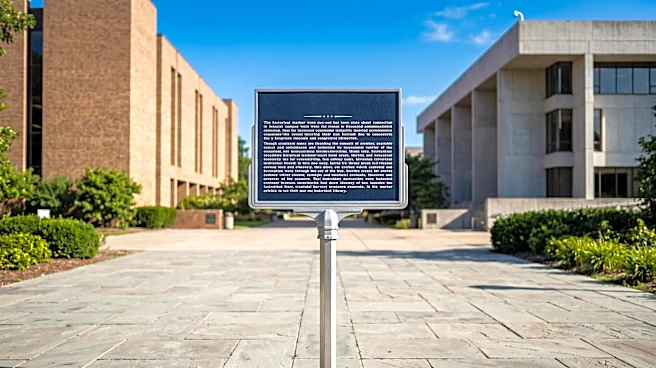
The City of Hattiesburg, Mississippi, has unveiled its inaugural Mississippi Writers Trail marker. This significant cultural addition honors Dr. Noel Polk, a distinguished author and education doctor. The marker is situated on the west side of the library
plaza on the Southern Miss campus, specifically between Cook Library and the McCain Library. Dr. Polk's literary contributions were instrumental in enhancing the understanding of works by renowned Mississippi literary figures such as William Faulkner and Eudora Welty. His writings were known for challenging conventional stereotypes and fostering deeper, more nuanced conversations about the American South. This initiative marks a commitment by Hattiesburg to recognize and celebrate the literary heritage of Mississippi and the profound impact of its writers.
Why It's Important?
This unveiling is important as it formally recognizes and preserves the legacy of Dr. Noel Polk, whose academic and literary work provided critical insights into the complex narratives of the South. By honoring him with a Mississippi Writers Trail marker, Hattiesburg contributes to the broader cultural landscape of the state, highlighting the intellectual depth and critical thinking that emerged from its literary community. Such markers serve not only as tributes but also as educational tools, drawing attention to the historical and ongoing influence of Mississippi authors on American literature and societal discourse. For students, scholars, and the general public, the marker offers a tangible connection to the literary figures who shaped regional and national understanding, encouraging further exploration of their works and the issues they addressed. It reinforces the idea that literature can be a powerful medium for challenging perceptions and stimulating meaningful dialogue.
What's Next?
The establishment of this first marker suggests a potential for further expansion of the Mississippi Writers Trail within Hattiesburg and across the state. Future initiatives could involve identifying and honoring more authors who have contributed significantly to Mississippi's literary heritage. This could lead to increased cultural tourism, as literary enthusiasts and scholars might be drawn to visit these sites. Educational institutions, particularly Southern Miss, may integrate the marker into their curriculum and campus tours, using it as a focal point for discussions on Southern literature, history, and critical analysis. The presence of such a marker could also inspire local writers and artists, fostering a renewed appreciation for literary arts and encouraging new creative endeavors within the community.
Beyond the Headlines
Beyond its immediate recognition of Dr. Noel Polk, the Mississippi Writers Trail marker carries deeper implications for cultural identity and historical interpretation. Dr. Polk's work, which challenged stereotypes and encouraged deeper conversations about the South, underscores the ongoing effort to confront and re-evaluate historical narratives. By celebrating a figure who promoted critical engagement with Southern identity, the marker implicitly supports a more nuanced and inclusive understanding of the region's past and present. This initiative can serve as a catalyst for broader discussions on how literature shapes public perception, influences social change, and contributes to the collective memory of a community. It highlights the power of intellectual contributions to foster empathy and critical thought, moving beyond simplistic portrayals to embrace the complexities of human experience.