





What's Happening?
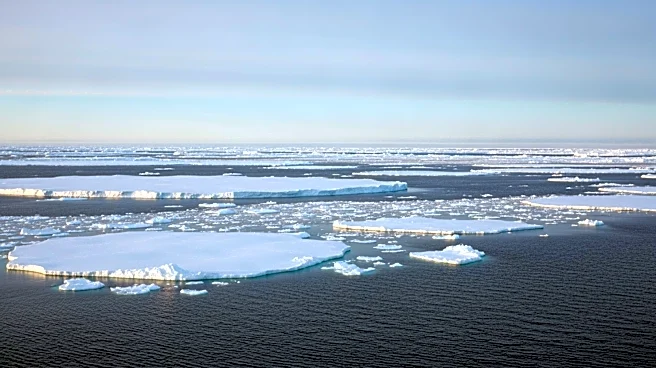
A recent study published in the journal Science Advances has raised alarms about the potential collapse of the Atlantic Meridional Overturning Circulation (AMOC), a crucial ocean current system. The AMOC, which includes the Gulf Stream, plays a vital
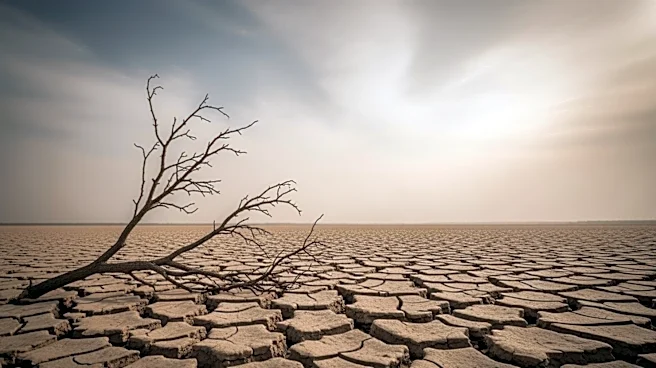
role in regulating climate by circulating warm water from the tropics to the Northern Hemisphere. The study suggests that the AMOC could slow down by 43% to 59% by 2100, a significantly greater weakening than previously projected. This slowdown could lead to severe climate disruptions, including rising sea levels in North America, severe droughts in southern Europe, and drastic temperature drops in northern Europe. The study utilized a novel statistical method, ridge-regularized linear regression, to improve the accuracy of climate models, reducing the margin of error by 79% compared to previous models.
Why It's Important?
The potential collapse of the AMOC poses significant risks to global climate stability and socioeconomic systems. The AMOC's weakening could disrupt ecosystems and food production, potentially reducing the land available for growing essential crops like wheat and maize, which are crucial for global food security. The changes in climate patterns could also lead to increased frequency and severity of extreme weather events, affecting millions of people worldwide. The study highlights the urgent need for nations to prepare for these potential impacts, as the changes could persist for hundreds or even thousands of years, fundamentally altering the global climate and economy.
What's Next?
The study's findings underscore the importance of continued research and monitoring of the AMOC to better understand its dynamics and potential impacts. Policymakers and scientists are urged to consider these findings in climate adaptation and mitigation strategies. There is a need for international cooperation to address the potential consequences of AMOC weakening, including investments in climate-resilient infrastructure and sustainable agricultural practices. The scientific community will likely focus on refining climate models and exploring further the implications of AMOC changes on global climate systems.
Beyond the Headlines
The potential collapse of the AMOC raises ethical and cultural questions about humanity's responsibility to mitigate climate change and protect vulnerable populations. The disproportionate impact on different regions highlights the need for equitable climate policies that consider the needs of developing countries and marginalized communities. Long-term shifts in climate patterns could also lead to geopolitical tensions over resources and migration, necessitating proactive international dialogue and cooperation.