






What's Happening?
China is actively pursuing a strategy to power its rapidly expanding computing infrastructure, particularly for AI model training and inference, with green energy. This initiative involves shifting computing workloads westward to regions like Zhongwei
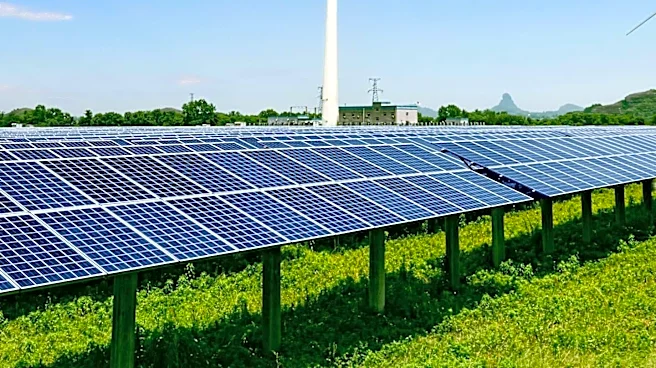
in the Ningxia Hui Autonomous Region, where renewable energy sources and land are more abundant. For instance, a data center operated by China Mobile in Zhongwei now receives over 80% of its electricity directly from a nearby solar power station. This solar farm, along with a 1.5-gigawatt wind farm under construction, aims to provide round-the-clock green power to data centers. The city of Zhongwei also benefits from a dry, cool climate and stable geological conditions, allowing data centers to rely on natural cooling for eight to ten months a year, further reducing electricity consumption. This national push, known as the 'East Data, West Computing' project, designates Ningxia as one of China's eight national computing hubs.
Why It's Important?
China's strategic shift to power its computing boom with green energy has significant implications for global technology and climate efforts. As AI and data processing demands surge, the energy consumption of data centers is becoming a critical concern worldwide. By prioritizing renewable energy for these operations, China is setting a precedent for sustainable technological growth, potentially influencing other nations, including the U.S., to adopt similar practices. This move could accelerate the development and deployment of green energy infrastructure globally, as the demand for clean power for computing intensifies. For the U.S., this highlights the competitive landscape in AI and computing, where energy efficiency and sustainability are becoming key differentiators. It also underscores the importance of investing in renewable energy solutions to support domestic technological advancements and reduce the environmental impact of its own growing data centers, which are projected to consume substantial electricity by 2030.
What's Next?
China's 'East Data, West Computing' project is set to continue expanding, with plans to further advance the integrated computing network and align power supply with computing demand. The goal is to build a platform that dynamically coordinates computing capacity and power supply, optimizing electricity use and driving down both carbon emissions and operational costs. This will likely involve further investment in large-scale renewable energy projects, such as solar and wind farms, in western regions. For the U.S. and other nations, this development could spur increased focus on their own strategies for sustainable computing. We may see more initiatives to co-locate data centers with renewable energy sources, invest in advanced cooling technologies, and develop policies that incentivize green computing. The competition in AI development will increasingly be intertwined with the race for energy efficiency and sustainable infrastructure.
Beyond the Headlines
This strategic move by China has deeper implications for global energy policy, technological sovereignty, and environmental stewardship. By decentralizing computing power and linking it directly to renewable energy sources, China is not only addressing its carbon footprint but also enhancing the resilience and security of its digital infrastructure. This approach could inspire a re-evaluation of data center placement and energy sourcing models in other countries, including the U.S., potentially leading to a more distributed and sustainable global computing network. Furthermore, the emphasis on natural cooling in regions like Zhongwei highlights the potential for geographical advantages to play a significant role in the future of data center development. This could lead to a global competition for optimal locations that offer both abundant renewable energy and favorable climatic conditions, reshaping the economic geography of the tech industry and fostering new forms of international collaboration or competition in green technology.