

What's Happening?
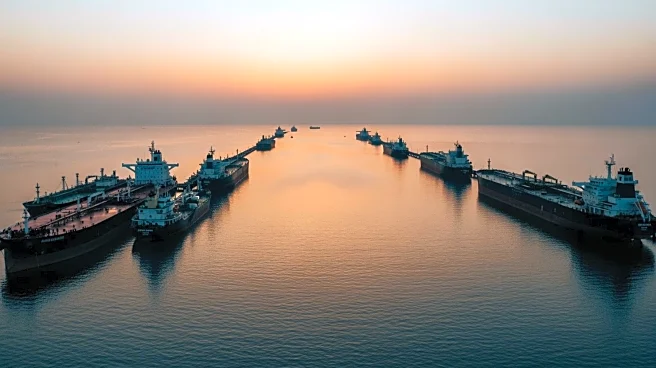
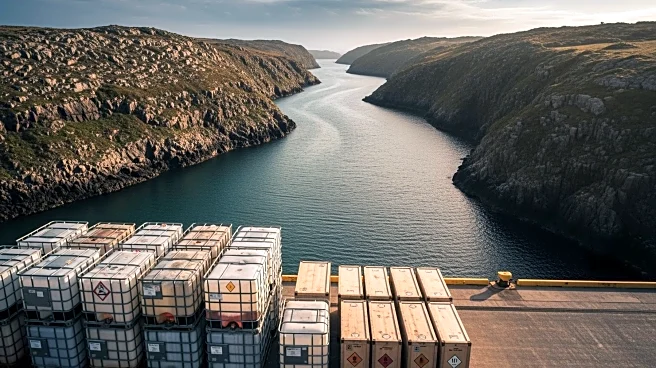
At least 28 ships, including those carrying crude oil, liquefied petroleum gas (LPG), and LNG supplies to India, are currently stranded near the Strait of Hormuz. This situation has arisen due to the ongoing conflict in the Middle East, which has disrupted
the usual energy supply routes to India, the world's third-largest crude oil importer. The Indian government has confirmed that 18 of these vessels are India-flagged, with the rest being foreign-flagged. The priority for India is to ensure the safe passage of these vessels through the Strait, which is a critical chokepoint for global energy flows. Despite the challenges, some India-flagged vessels have successfully transited the Strait, indicating a potential easing of restrictions.
Why It's Important?
The stranding of these ships poses a significant threat to India's energy security, as the country heavily relies on imports for its crude oil and LPG needs. The disruption in supply could lead to increased energy prices and potential shortages, affecting both the economy and daily life in India. Furthermore, the situation highlights the vulnerability of global energy supply chains to geopolitical tensions, particularly in regions like the Middle East that are crucial for energy exports. The incident underscores the need for India to diversify its energy sources and routes to mitigate such risks in the future.
What's Next?
India is likely to continue diplomatic efforts to ensure the safe passage of its vessels through the Strait of Hormuz. The government may also explore alternative routes and suppliers to secure its energy needs. Additionally, the situation could prompt India to accelerate its investments in renewable energy and domestic energy production to reduce dependency on imports. The international community, particularly countries reliant on Middle Eastern energy supplies, will be closely monitoring the situation, as prolonged disruptions could have broader implications for global energy markets.