
What's Happening?
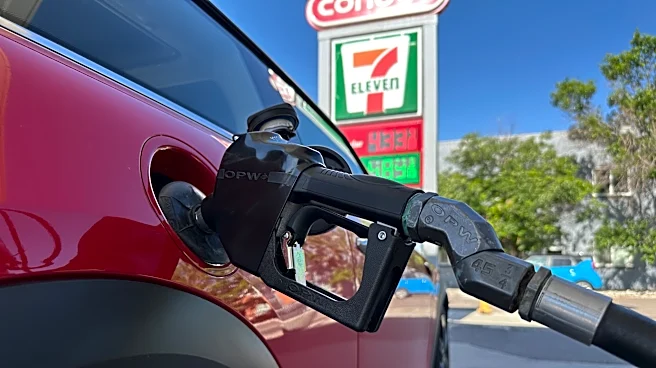
The national average price for a gallon of regular gasoline has decreased by 18 cents to $4.24, marking the second consecutive week of decline, according to the American Automobile Association (AAA). This
drop in gas prices is attributed to crude oil prices remaining below $100 per barrel. However, uncertainty persists regarding the reopening of the Strait of Hormuz, which could influence future oil prices. The closure of the Strait of Hormuz, a critical passage for global oil flows, has contributed to the volatility in gas prices. Despite the decrease, the current average price is significantly higher than the $3.14 per gallon recorded a year ago. The situation has led to predictions that this summer could be one of the most expensive at the pump in years.
Why It's Important?
The decline in gas prices offers some relief to consumers, but the ongoing closure of the Strait of Hormuz poses a risk of further price increases. This situation is particularly significant as it affects summer travel plans for many Americans. According to GasBuddy, 56% of Americans plan to drive more than two hours this summer, a decrease from 69% last year, largely due to rising fuel costs. The high prices are influencing travel decisions, with 67% of respondents indicating that gas prices are impacting their driving plans. The economic implications are substantial, as consumers may reduce spending on other goods and services to accommodate higher fuel costs. Additionally, some states are considering suspending gas taxes to alleviate the financial burden on drivers.
What's Next?
If the Strait of Hormuz remains closed for most of the summer, gas prices could reach $5 per gallon or higher, potentially setting new records. Even if the strait reopens, it may take a year or more for prices to stabilize. Federal discussions are underway to address the issue, and states are exploring measures such as suspending gas taxes to provide relief. Consumers are advised to use tools like GasBuddy to find the lowest prices in their area. The situation remains fluid, and stakeholders are closely monitoring developments to mitigate the impact on travel and the economy.