



What's Happening?
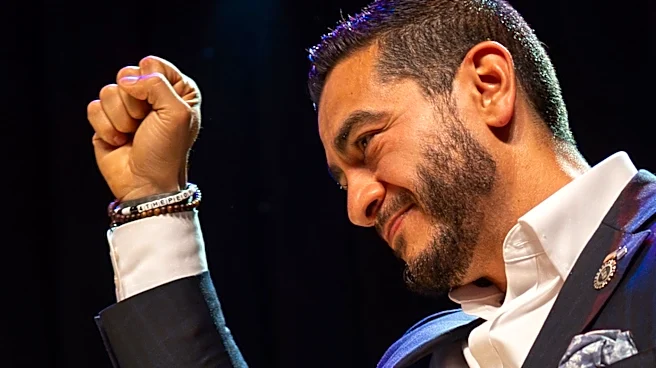
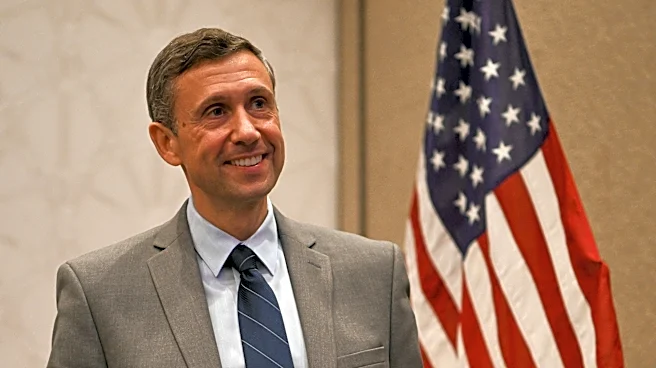
Mason Pressler, political manager for Michigan Democratic U.S. Senate candidate Abdul El-Sayed, sparked controversy by likening a campaign video from Republican opponent Mike Rogers to a 'KKK cross burning.' Rogers' video featured him riding in a red antique
Ford pickup truck with two American flags, accompanied by Toby Keith's 'American Ride.' Pressler, in a post on X, stated that Rogers' campaign had 'the aesthetics of a 1960s white flight suburb and a KKK cross burning.' Rogers' campaign quickly condemned the remark, accusing Pressler of suggesting that 'driving a Michigan-made Ford truck is akin to the KKK.' El-Sayed's communications director, Roxie Richner, clarified that Pressler's views are his own and not representative of the campaign, citing Pressler's X bio which explicitly states his posts are personal opinions. The incident adds to existing scrutiny of El-Sayed's campaign, which has faced criticism for its left-wing politics and associations.
Why It's Important?
This incident highlights the increasingly polarized and often inflammatory rhetoric present in U.S. political campaigns, particularly in competitive Senate races. The comparison of a mainstream Republican campaign video to a symbol of racial hatred like a KKK cross burning can escalate tensions and distract from substantive policy debates. For Mike Rogers' campaign, the statement provides an opportunity to portray El-Sayed's team as extreme and out of touch with Michigan voters, especially those who identify with symbols like American-made vehicles and patriotic displays. Conversely, El-Sayed's campaign faces the challenge of distancing itself from Pressler's controversial remarks to avoid alienating moderate voters, even as they attempt to frame the comments as individual opinions. The incident also underscores the complexities of managing campaign staff's social media presence and the potential for individual statements to impact a candidate's public image and electoral prospects. Such exchanges can contribute to a broader sense of division and distrust within the political landscape.
What's Next?
The immediate aftermath will likely see continued efforts by Rogers' campaign to leverage Pressler's comments to their advantage, potentially using it in campaign advertisements or public statements to paint El-Sayed as aligned with extreme views. El-Sayed's campaign will need to reinforce its message that Pressler's comments do not reflect the campaign's official stance, possibly through further public statements or internal disciplinary actions, if deemed necessary. The incident could also prompt increased scrutiny from media outlets regarding the tone and content of both campaigns' messaging. Voters in Michigan will be watching to see how both candidates address the controversy and whether it influences their perceptions of the candidates' leadership and judgment. The broader implications could include a renewed focus on the role of social media in political discourse and the responsibility of campaigns to monitor and manage the public statements of their staff.
Beyond the Headlines
This event touches upon deeper issues concerning political discourse and the weaponization of historical symbols in modern campaigning. The comparison to the KKK, a group synonymous with racial terror, is a potent and highly charged accusation that can overshadow policy discussions and foster an environment of animosity. It raises questions about the boundaries of political speech and the impact of such rhetoric on the democratic process. The incident also highlights the generational and ideological divides within political parties, as El-Sayed's campaign has previously faced criticism for its 'far-left' leanings. The use of social media by campaign staff, often seen as a direct and unfiltered channel, can inadvertently create liabilities for candidates, forcing campaigns to navigate the fine line between individual expression and collective responsibility. This dynamic underscores the evolving challenges of maintaining message discipline in an age of instant communication and heightened political sensitivity.