






What's Happening?
A Massachusetts man, identified as 33-year-old Cameron Wholley, was fatally struck by an Amtrak train in Plaistow, New Hampshire, on Thursday afternoon. The incident occurred near the railroad tracks by Blossom Road. Plaistow police and firefighters responded
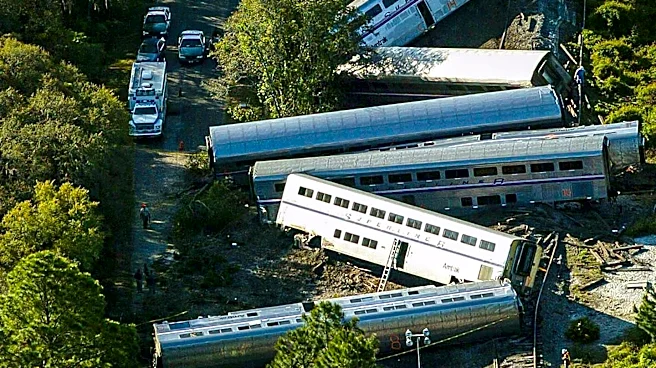
to the scene around 1:39 p.m., where they found the man deceased alongside the tracks. Authorities reported that Wholley was walking west along the railroad tracks when he was hit by the train, which approached him from behind. Amtrak confirmed that the train was traveling from Portland, Maine, to Boston at the time of the incident. While Amtrak initially stated the train hit a vehicle, Plaistow police did not mention a vehicle in their news release. No injuries were reported among the train passengers or crew members, and Amtrak services are reportedly running on schedule. This marks the second fatal Amtrak incident in New Hampshire within the last three months, following a similar crash in Claremont in June.
Why It's Important?
This tragic incident underscores the critical safety concerns associated with railroad tracks and the importance of public awareness regarding train safety. The death of Cameron Wholley highlights the dangers of walking on or near active railway lines, which are not designated pedestrian areas. The fact that this is the second fatal Amtrak crash in New Hampshire in a short period suggests a potential need for increased public education campaigns or enhanced safety measures around railroad crossings and tracks in the region. For Amtrak, such incidents, while not causing injuries to passengers or crew in this case, can lead to service disruptions and raise questions about operational safety, even if the fault lies with individuals trespassing on tracks. The discrepancy between Amtrak's initial report of hitting a vehicle and the police report of striking a pedestrian also points to the challenges in immediate incident reporting and the need for clear, consistent communication during investigations. This event serves as a somber reminder of the irreversible consequences of railway trespassing.
What's Next?
Plaistow police will likely continue their investigation into the exact circumstances surrounding Cameron Wholley's death. This will involve reviewing any available evidence, including witness statements and potentially train data recorders, to fully understand how the incident occurred. Amtrak may also conduct its own internal review, though their immediate focus is on maintaining scheduled services. Given this is the second fatal incident in New Hampshire recently, there might be increased attention from local authorities and railway safety organizations on preventative measures. This could include evaluating the effectiveness of existing signage, fencing, or public awareness campaigns in areas prone to trespassing. Discussions about enhancing railway safety protocols or public outreach efforts could emerge as a result of these repeated incidents, aiming to prevent future tragedies and ensure the safety of both the public and railway operations.
Beyond the Headlines
Beyond the immediate tragedy, this incident brings to light the broader societal issue of pedestrian safety around railway infrastructure. Despite numerous warnings and safety campaigns, individuals continue to trespass on tracks, often with fatal consequences. This behavior can stem from various factors, including seeking shortcuts, distraction, or a lack of understanding of the speed and force of oncoming trains. The repeated nature of such incidents in New Hampshire suggests a deeper challenge in effectively communicating the dangers to the public or in implementing physical barriers that deter trespassing. This situation could prompt a re-evaluation of how communities and railway operators collaborate on safety initiatives, potentially leading to more innovative approaches in public education, urban planning near railway lines, or even technological solutions to detect and warn trespassers. The human element of these incidents often involves complex social factors that extend beyond simple rule-breaking, necessitating a comprehensive approach to prevention.