




What's Happening?
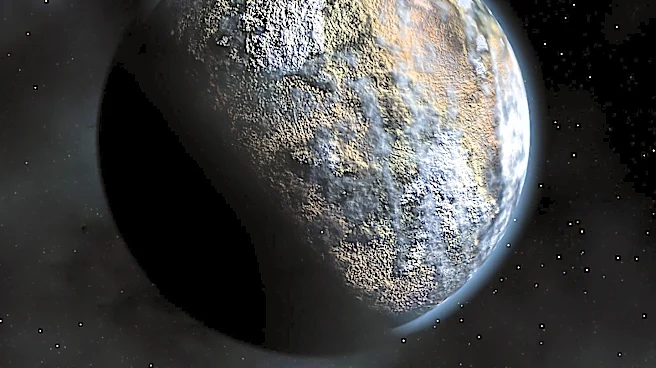
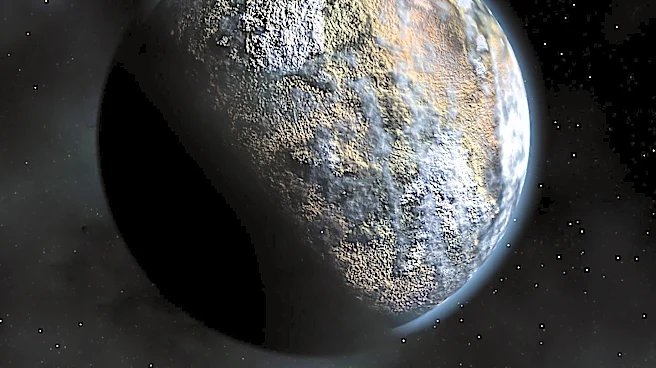
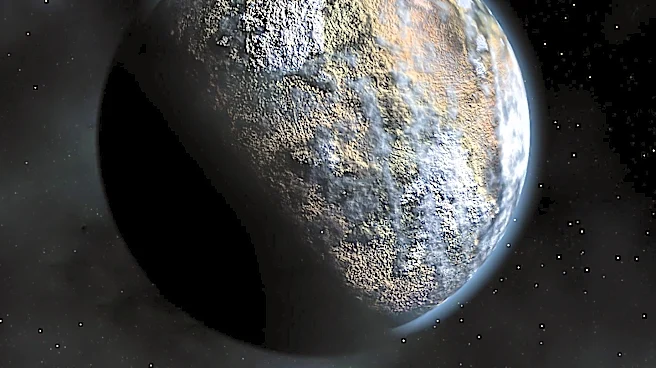
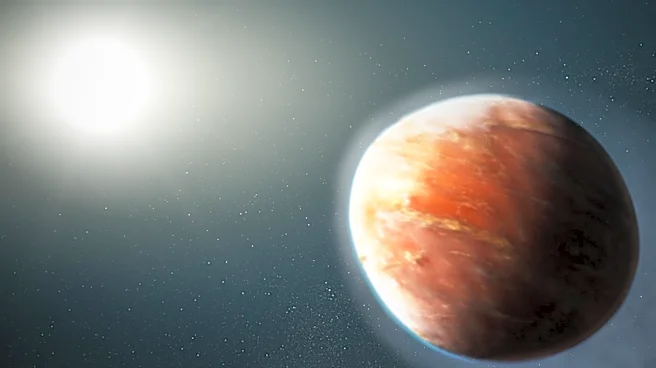
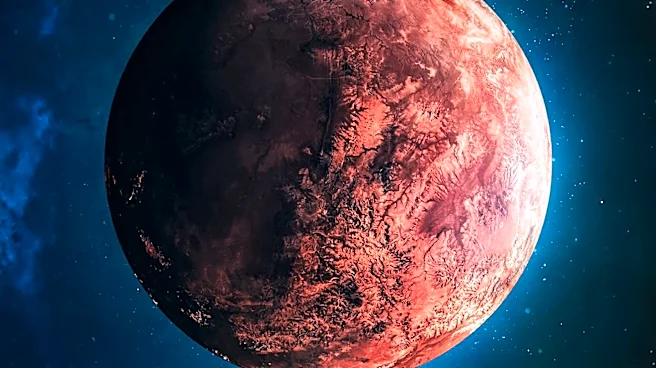
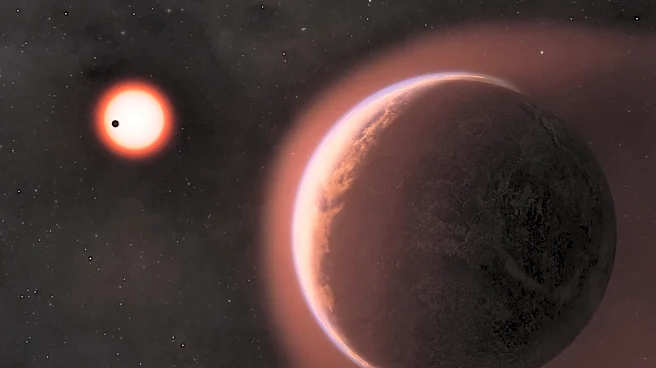
Researchers have identified the first atmosphere surrounding an Earth-like, rocky planet located within the habitable zone of a distant star. The planet, named LHS 1140 b, is situated 48 light-years from Earth and orbits a red star that is smaller and cooler
than the Sun. The atmosphere contains helium, which is not conducive to life, but the presence of other gases is possible. This discovery, led by Dr. Collin Cherubim of Harvard University, marks a significant step in the search for extraterrestrial life, as it is the first time an atmosphere has been found on a rocky planet in such a zone. The findings suggest that conditions similar to Earth could exist beyond our solar system, although the presence of life-supporting gases remains unconfirmed.
Why It's Important?
The discovery of an atmosphere on LHS 1140 b is crucial as it enhances the possibility of finding life beyond Earth. It provides evidence that Earth-like conditions might exist elsewhere in the universe, which could have profound implications for our understanding of life and its potential diversity. The research underscores the importance of studying exoplanets in the habitable zone, often referred to as the 'Goldilocks zone,' where conditions might be 'just right' for life. This finding could drive further astronomical research and exploration, potentially leading to new insights into planetary formation and the conditions necessary for life.