



What's Happening?
The Environmental Protection Agency (EPA) has approved a two-season, time-limited registration for the use of over-the-top dicamba on dicamba-tolerant soybeans and cotton for the 2026 and 2027 growing seasons. This decision comes with significantly tighter
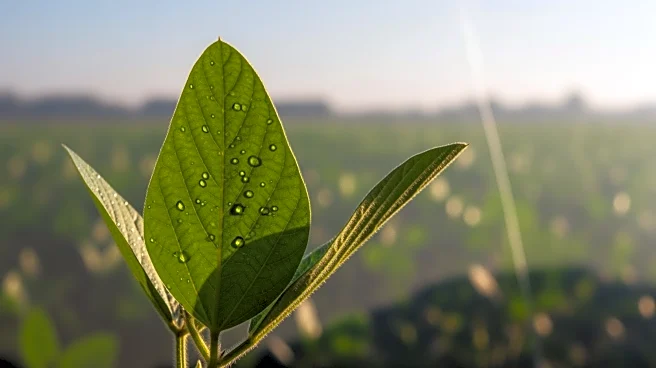
federal restrictions compared to previous registrations. The new label includes the strongest protections ever required for over-the-top dicamba use, reflecting years of farmer input, scientific review, and legal scrutiny. The EPA's decision aims to address the needs of soybean and cotton growers who rely on dicamba to manage herbicide-resistant weeds, such as Palmer amaranth. The approval is limited to the next two growing seasons, with the new label designed to mitigate concerns related to drift, volatility, and environmental risk.
Why It's Important?
The EPA's decision to approve dicamba use under stricter regulations is significant for the agricultural sector, particularly for soybean and cotton farmers facing challenges from herbicide-resistant weeds. The new restrictions aim to balance the need for effective weed control with environmental and safety concerns. The American Soybean Association has welcomed the decision, emphasizing the importance of dicamba in integrated pest management systems. However, environmental groups have criticized the move, citing past issues with dicamba drift causing damage to non-target crops and vegetation. The decision highlights the ongoing debate between agricultural needs and environmental protection.
What's Next?
The next two growing seasons will serve as a test period for the new dicamba regulations. The EPA will monitor field performance, incident reports, and compliance data to determine whether over-the-top dicamba use will continue beyond 2027. Farmers and applicators will need to adhere to the new requirements, including limited applications, temperature-based restrictions, and mandatory conservation practices. The outcome of this test period could influence future regulatory decisions and the availability of dicamba as a weed control tool.