




What's Happening?
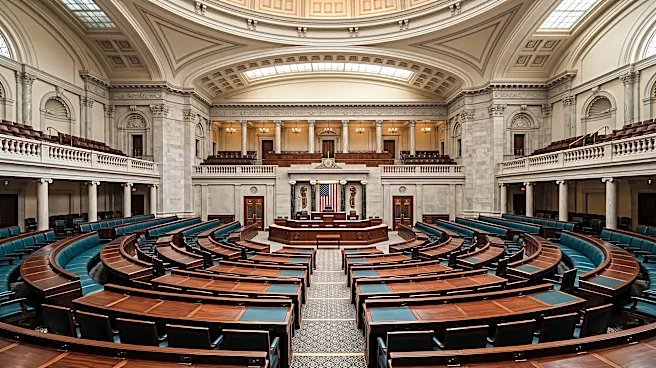
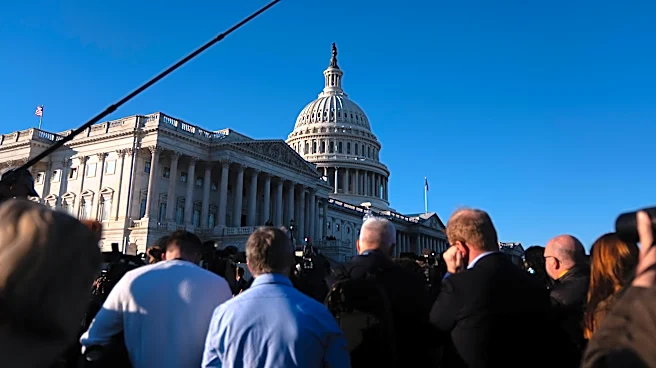
The U.S. House of Representatives has passed a bill, introduced by Democratic Representative Jared Golden, that aims to extend the moratorium on new regulations concerning North Atlantic right whales until 2035. This bill, approved by a vote of 219-196,
has now been sent to the Senate for consideration. The original moratorium, established in 2022, was set to expire in 2028. This legislative action follows an announcement by the National Marine Fisheries Service (NMFS) on November 5, indicating that new scientific analyses suggest U.S. fisheries might be meeting federal standards for protecting endangered right whales. The Maine Lobstermen’s Association (MLA) welcomed this shift, stating that NMFS expects its estimates of right whale deaths and serious injuries attributed to U.S. fisheries to be substantially lower than previous 2022 estimates. These findings, if confirmed after scientific review, could satisfy the federal “Potential Biological Removal” standard under the Marine Mammal Protection Act.
Why It's Important?
This development holds significant importance for the U.S. fishing industry, particularly for Maine lobstermen, who have faced stringent regulations and associated financial burdens due to right whale protection efforts. The potential extension of the moratorium provides a reprieve for the industry, which accounts for approximately 75% of Maine’s commercial fisheries value and supports an estimated 17,500 jobs and $2 billion in economic activity. The MLA’s successful legal challenge against NMFS in 2023, which found the agency’s reliance on worst-case assumptions to be 'egregiously wrong,' paved the way for a re-evaluation of scientific data. This legislative and scientific shift could lead to more balanced regulations that consider both environmental protection and economic sustainability for coastal communities. The outcome will influence future policy decisions regarding marine conservation and the economic viability of U.S. fisheries.
What's Next?
The bill to extend the moratorium on right whale regulations will now proceed to the Senate for a vote. Concurrently, the new data and analyses from NMFS are subject to peer review. Maine Department of Marine Resources Commissioner Carl Wilson noted that NMFS’s preliminary review has the potential to bring right whale deaths and serious injuries closer to the Potential Biological Removal level. The Atlantic Large Whale Take Reduction Team has postponed its December in-person meeting, with a virtual information session scheduled for December 2. NMFS aims to publish a final rule by the end of 2028. The Maine Lobstermen’s Association will continue to monitor these steps to ensure that the new analyses are finalized and that NMFS’s regulatory decisions are based on sound science and comply with federal law, potentially leading to a less restrictive regulatory environment for the fishing industry.
Beyond the Headlines
The ongoing debate surrounding right whale protection highlights the complex interplay between environmental conservation, scientific methodology, and economic interests. The legal victory by the Maine Lobstermen’s Association against NMFS underscores the importance of robust scientific evidence in policy-making and the potential for legal challenges to reshape regulatory approaches. This situation also brings to light the significant financial and operational costs imposed on industries by environmental regulations, prompting a re-evaluation of how these costs are balanced against conservation goals. The shift in NMFS’s estimates, if validated, could set a precedent for how federal agencies assess and implement environmental protections, potentially leading to more collaborative approaches that integrate industry-specific data and local knowledge into broader conservation strategies. This could foster a more sustainable coexistence between human economic activities and endangered species protection.