




What's Happening?
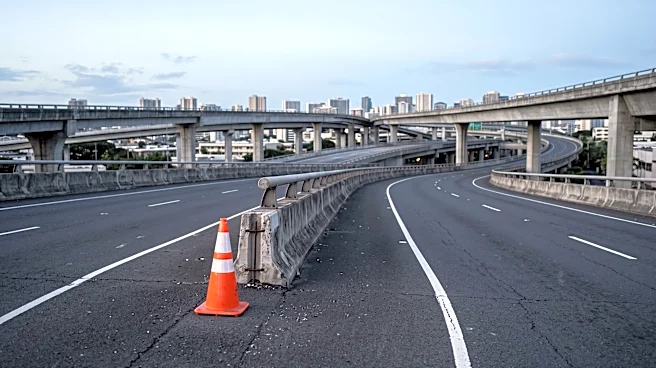
The Honolulu Police Department initiated a closure of all H-1 eastbound lanes near the Liliha Street Overpass early Friday morning due to a police investigation. The closure, which began just after 5 a.m., led to significant traffic disruptions. Motorists
were detoured via the Vineyard Boulevard off-ramp, and the public was advised to proceed with caution and anticipate delays. In response to the traffic impact, the Hawaii Department of Transportation (HDOT) extended the operating hours of the zipperlane to 9:30 a.m. Initially, only the two left lanes were reopened at 7:42 a.m., with the remaining two lanes staying closed. All lanes were subsequently reopened just after 8 a.m., concluding the hours-long closure.
Why It's Important?
The closure of a major freeway like H-1 in Honolulu has immediate and significant impacts on daily commuters and local businesses. Such disruptions can lead to lost productivity as employees are delayed, and can affect supply chains for businesses relying on timely deliveries. For residents, it means extended travel times and increased stress, highlighting the vulnerability of urban infrastructure to unforeseen events like police investigations. The incident underscores the critical role of efficient traffic management and alternative routes in mitigating the economic and social costs of road closures in densely populated areas. The swift action by HDOT to extend zipperlane access helped alleviate some of the congestion, demonstrating the importance of responsive traffic solutions.
What's Next?
While the lanes have reopened, authorities will likely continue their investigation into the incident that prompted the closure. The Honolulu Police Department has not yet released details regarding the nature of the investigation. Depending on the findings, there could be further legal proceedings or public statements. For commuters, the immediate impact has subsided, but the event serves as a reminder of potential traffic disruptions. Local transportation authorities may review the incident to assess the effectiveness of their detour strategies and communication protocols during such emergencies, potentially leading to refinements in future response plans.
Beyond the Headlines
This incident, while seemingly a routine traffic disruption, highlights broader issues concerning urban resilience and emergency preparedness in U.S. cities. The reliance on major arteries like H-1 for daily commerce and commuting means that any closure, regardless of its cause, can ripple through the local economy and community. It also brings to light the ongoing challenge for urban planners and law enforcement to balance public safety needs with the imperative of maintaining economic flow. The event could prompt discussions on investing in more robust public transportation alternatives or developing advanced traffic management systems to better handle unexpected closures and minimize their societal impact.