


What's Happening?
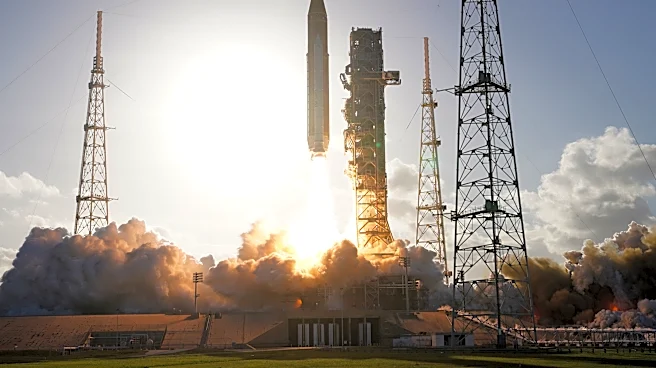
The Artemis II mission has successfully launched, sending four astronauts on a journey around the moon and back, marking the first human lunar mission since Apollo 17 in 1972. The mission has sparked reflections on humanity's achievements and aspirations
in space exploration. The launch, which was watched by many with awe and hope, highlights the collaborative efforts of scientists, engineers, and technicians who made the mission possible. The mission commander, Reid Wiseman, noted the beauty of the moonrise as the crew embarked on their historic journey. The mission aims to travel over 250,000 miles from Earth, setting a new record for human space travel.
Why It's Important?
The Artemis II mission is a significant milestone in space exploration, symbolizing human ingenuity and the potential for peaceful exploration beyond Earth. It serves as a reminder of the positive impact of scientific collaboration and technological advancement. The mission also highlights the contrast between the destructive use of technology and its potential to inspire and unite humanity in the pursuit of knowledge and discovery. By rekindling interest in space exploration, Artemis II has the potential to inspire future generations to pursue careers in STEM fields and contribute to the advancement of human knowledge and capabilities.
Beyond the Headlines
The Artemis II mission invites deeper reflection on humanity's place in the universe and the ethical considerations of space exploration. As we venture further into space, questions about the sustainability of human activities, the preservation of celestial bodies, and the equitable sharing of space resources become increasingly important. The mission also underscores the need for international cooperation in space exploration, as nations work together to achieve common goals and address global challenges. By fostering a sense of shared purpose and responsibility, Artemis II can help promote a more inclusive and sustainable approach to space exploration.