
What's Happening?
India has achieved a significant milestone in its space sector by launching the heaviest satellite ever from its soil into low Earth orbit. The Indian Space Research Organisation (ISRO) successfully launched
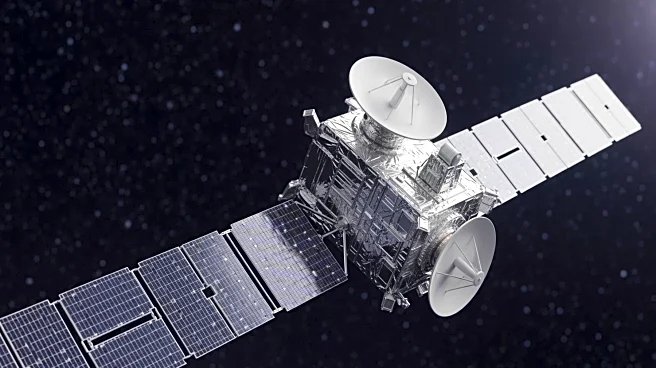
the LVM3-M6 rocket from the Satish Dhawan Space Centre, carrying the BlueBird Block-2 communication satellite. This satellite is part of a collaboration with the U.S.-based AST SpaceMobile, which is developing the first space-based cellular broadband network that communicates directly with smartphones. The launch is a commercial alternative to SpaceX's satellite constellation and marks the second U.S.-India space collaboration this year, following the NASA-ISRO Synthetic Aperture Radar mission in July.
Why It's Important?
This launch is crucial as it strengthens U.S.-India relations in the space sector, especially at a time when China is expanding its influence in space. The BlueBird Block-2 satellite, designed in the U.S., is part of a global constellation aiming to provide mobile connectivity in remote areas without the need for ground stations. This development enhances India's role in the global commercial launch market and showcases its heavy-lift launch capabilities. For AST SpaceMobile, this launch represents a breakthrough in delivering space-based cellular broadband directly to smartphones, marking a significant step in their deployment plans.
What's Next?
Following the successful launch, AST SpaceMobile plans to continue its deployment strategy, aiming to launch between 45 to 60 satellites by the end of 2026. This expansion will further enhance global connectivity and solidify the company's position in the space-based broadband market. The collaboration between ISRO and AST SpaceMobile is expected to pave the way for more joint ventures, potentially leading to advancements in satellite technology and increased competition in the global space industry.