






What's Happening?
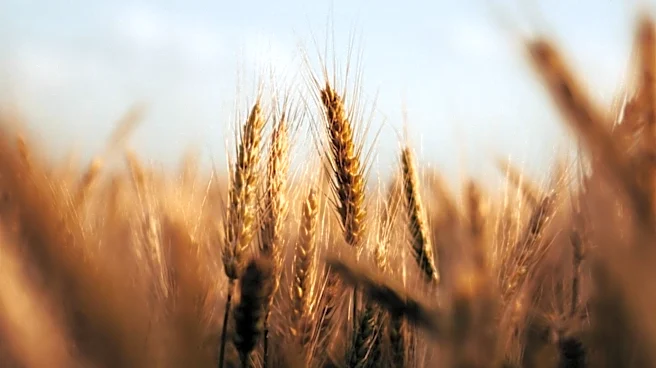
Researchers from the Brazilian Agricultural Research Corporation (EMBRAPA) and the University of São Paulo (USP) have identified three bacterial species that can protect wheat plants from root rot caused by the fungus Bipolaris sorokiniana. Their study,
published in NPJ Biofilms and Microbiomes, demonstrates that inoculating soil with these bacteria can reduce disease symptoms by up to 60%. The bacteria, specifically Streptomyces virginiae, Paenibacillus ottowii, and Pseudomonas inefficax, do not eliminate the pathogen but rather alter the soil microbiome to create a 'microbiological shield' that strengthens the plant's defenses. Pseudomonas inefficax was found to be the most effective, significantly increasing root biomass and restoring microbiome functions linked to plant protection. This research builds on previous studies that surveyed the soil microbiome of ancestral wheat varieties and commercial cultivars, with the selected bacteria originating from landrace wheat varieties from Turkey and Iran.
Why It's Important?
This discovery holds significant importance for U.S. agriculture and global food security. Root rot is a common and destructive disease affecting wheat, a cereal crop vital for global food supply. The development of bacterial inoculants offers a sustainable and environmentally friendly alternative to chemical fungicides, which can have negative impacts on soil health and biodiversity. By leveraging the natural protective mechanisms of soil microbiomes, this research could lead to more resilient and productive wheat crops, reducing yield losses and enhancing food security. The ability to protect plants without eliminating the pathogen suggests a more balanced ecological approach to disease management, potentially fostering healthier agricultural ecosystems. This approach could also reduce the economic burden on farmers by minimizing the need for costly chemical treatments and improving crop yields.
What's Next?
The researchers are now focused on understanding the specific plant-produced metabolites that support these beneficial bacteria and predicting the metabolic pathways activated during this interaction. This deeper understanding will facilitate the development of new technologies for controlling and preventing diseases in agricultural crops. The evaluated bacteria are part of EMBRAPA’s portfolio and are available for licensing by companies interested in developing products based on this research. This suggests that commercial applications, such as new bio-fertilizers or soil amendments, could be on the horizon. Future research will likely involve field trials to validate the effectiveness of these bacterial inoculants in diverse agricultural settings and to optimize their application for widespread use.
Beyond the Headlines
The study highlights a broader shift in agricultural science towards understanding and harnessing the power of microbiomes. Just as the human immune system relies on a healthy gut microbiome, plants depend on a robust soil microbiome for defense against pathogens. This research underscores the concept of 'ecological engineering,' where beneficial microorganisms are used to reconfigure the soil environment to favor plant health. This approach moves beyond simply targeting individual pathogens and instead focuses on building resilient plant-microbe systems. The long-term implications include a potential paradigm shift in agricultural practices, promoting biodiversity in soil, reducing reliance on synthetic chemicals, and fostering more sustainable food production systems globally. This could also inspire similar research into other crops and diseases, expanding the application of microbiome-based solutions in agriculture.