






What's Happening?
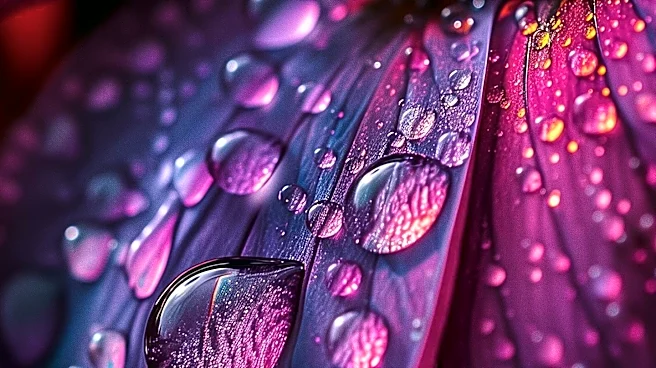
Researchers at Florida Atlantic University (FAU) have published a study in New Phytologist detailing how translucent 'windows' in flower petals create unique microclimates within flowers, impacting the microbial communities that reside there. Jessica
Williams, an integrative biology doctoral student and first author of the study, explained that flowers possess distinct internal temperatures and humidities, similar to larger ecosystems. The research focused on two native southeastern U.S. blueberry cousins, Lyonia lucida and Lyonia fruticosa, which feature semi-translucent petal sections. The team measured internal and external flower temperatures, quantified yeasts, molds, and bacteria, and analyzed ultraviolet and infrared radiation transmission through petals. They discovered that flowers with high infrared (IR)-transmitting windows generally had less mold, and warmer flowers tended to harbor fewer microbes. This suggests that the interaction of light and temperature is a crucial factor in shaping floral microbiomes.
Why It's Important?
This research offers a novel perspective on the ecological roles of floral structures beyond their known function in attracting pollinators. The findings suggest that even subtle features like translucent petal patches can have significant ecological consequences, potentially influencing broader ecosystem functions such as pollination. Floral microbial communities are not merely incidental; they can alter nectar characteristics, which in turn affects interactions between flowers and their pollinators. Understanding these intricate relationships could lead to new insights into plant reproduction, ecosystem health, and biodiversity. The study highlights the complexity of natural systems and the importance of micro-environmental factors in shaping biological interactions, potentially informing conservation efforts and agricultural practices by revealing how environmental changes might impact plant-microbe-pollinator dynamics.
What's Next?
The study's lead principal investigator, Jacob Francis, Ph.D., noted that while Lyonia lucida fit their prediction regarding windows warming flowers and influencing microbiomes, Lyonia fruticosa presented more questions, indicating species-specific variations. Future research will likely delve deeper into these differences to understand why similar traits yield varied outcomes in different species. The team plans to continue exploring how these microhabitat differences could scale up to affect entire ecosystem functions like pollination. This ongoing investigation aims to uncover the broader ecological implications of these microscopic interactions. Collaborations with institutions like Archbold Biological Station, which provided crucial support and facilities for this research, are expected to continue, fostering further field-based studies combined with advanced laboratory analyses.
Beyond the Headlines
The study's implications extend beyond immediate ecological understanding, touching upon the intricate design of nature and the subtle ways organisms adapt to their environments. The concept of 'microclimates' within flowers underscores the idea that even seemingly simple biological structures are complex, dynamic habitats. This research could inspire further studies into how plants manipulate their internal environments to foster beneficial microbial communities or deter harmful ones, potentially revealing novel mechanisms of plant defense or resource management. From a broader scientific perspective, it emphasizes the value of detailed observation and interdisciplinary approaches—combining botany, microbiology, and environmental physics—to uncover hidden ecological processes. The findings also highlight the potential for climate change to impact these delicate floral microclimates, thereby altering plant-pollinator relationships and overall ecosystem stability.