
What's Happening?
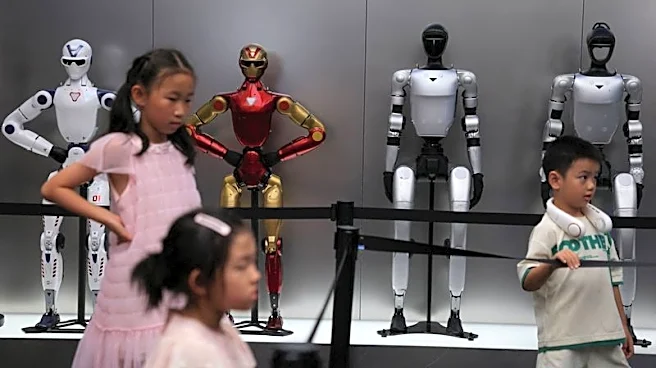
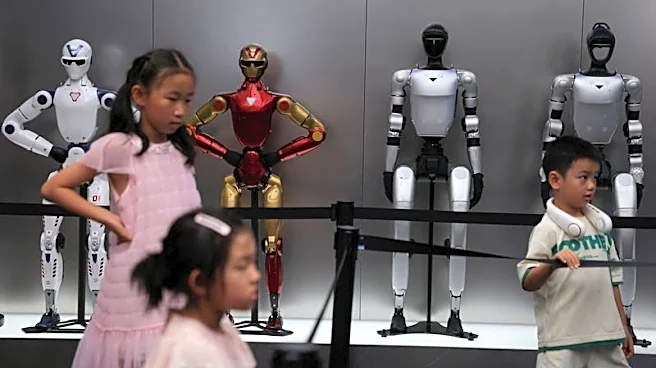
The second World Humanoid Robot Games (WHRG) in Beijing featured humanoid robots undertaking practical household chores and tasks in less standardized environments. Robots were scored on their ability
to tidy a living room, fold clothes in a bedroom, and wash and hang laundry in a bathroom and on a balcony. An unexpected parcel-delivery task also required robots to respond to voice commands, bring packages indoors, and then resume their previous chores. The scoring system penalized mistakes such as collisions, dropped objects, and crossing boundaries. If human intervention occurred, the attempt was treated as remote-controlled, reducing the scoring weight. The event attracted 666 teams and 2,056 robots from 16 countries, highlighting a shift towards testing robots in real-world scenarios rather than just standardized courses. Additionally, a hotel-service competition involved robots transporting luggage, replenishing amenities, and making beds, while a library-shelving competition tested precision, visual recognition, and reasoning in collecting and shelving books.
Why It's Important?
The focus on real-world tasks at the World Humanoid Robot Games signifies a critical advancement in robotics, moving beyond controlled demonstrations to practical applications. This shift is crucial for the commercial viability and widespread adoption of humanoid robots. By testing robots in complex, unstructured environments like homes, hotels, and libraries, the event pushes the boundaries of their mechanical components, algorithms, and adaptability. The emphasis on autonomy, where robots operate without constant human teleoperation, is a key indicator of progress in the sector. Successful deployment in these varied settings could lead to significant labor efficiencies in industries such as hospitality, logistics, and domestic services, potentially transforming how everyday tasks are performed. The competition also highlights the growing global interest and investment in humanoid robotics, positioning it as a potential new source of industrial growth and a field of intense technological competition.
What's Next?
The insights gained from the World Humanoid Robot Games are expected to drive further research and development in humanoid robotics, particularly in enhancing autonomy and adaptability to diverse real-world scenarios. Companies will likely focus on refining robot capabilities to minimize errors, improve dexterity, and increase operational efficiency in unstructured environments. The emphasis on practical applications suggests a future where humanoid robots could become more commonplace in various sectors, from household assistance to industrial logistics. The ongoing World Robot Conference in Beijing, running concurrently, will continue to showcase new products and technologies, potentially leading to new partnerships and investment opportunities. The competition's outcomes will also inform future design and engineering decisions, pushing manufacturers to create more robust and reliable robots capable of performing complex, multi-step tasks independently. The industry is poised for a transition from pilot projects to broader commercial deployment, with a strong focus on generating tangible economic value.
Beyond the Headlines
The shift towards testing humanoid robots in real-world, messy environments like homes and hotels has profound implications for the future of human-robot interaction and societal integration of AI. This move challenges the traditional perception of robots as confined to controlled industrial settings, suggesting a future where they could become integral to daily life. The scoring system, which penalizes mistakes and rewards autonomy, underscores the ethical and practical considerations of deploying robots in human-centric spaces. The ability of robots to handle unexpected tasks, like voice-commanded parcel delivery, points to a future where robots are not just tools but responsive agents capable of adapting to dynamic human needs. This development could lead to a re-evaluation of labor roles, with robots potentially taking over repetitive or physically demanding tasks, freeing up human workers for more creative or supervisory roles. However, it also raises questions about job displacement and the need for new skill sets in a robot-assisted economy. The long-term impact will depend on how effectively these robots can integrate into human society while maintaining safety, reliability, and ethical standards.