





What's Happening?
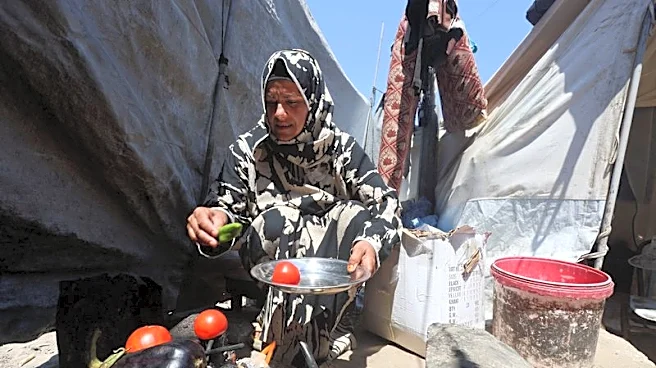
The Food and Agriculture Organization (FAO), UNICEF, and the United Nations World Food Programme (WFP) have reported improvements in food security and child nutrition in Gaza, driven by increased humanitarian assistance and commercial activity. Despite
these gains, the agencies caution that the progress is fragile and could be reversed without sustained aid and investment. The latest Integrated Food Security Phase Classification analysis shows a decrease in acute food insecurity, but many families still struggle to meet basic needs. The agencies are appealing for international support to scale up funding for food and nutrition assistance, agricultural production, healthcare, and livelihood recovery programs.
Why It's Important?
The situation in Gaza highlights the critical role of humanitarian aid in improving food security and nutrition. The fragile gains underscore the need for continued international support to prevent a reversal of progress. The agencies warn that without sustained funding, the lives of 2.1 million people in Gaza are at risk. The call for increased aid is crucial to ensure that improvements in food security and child nutrition are maintained, and to support the recovery of local food systems and essential services. The situation also emphasizes the importance of removing restrictions on agricultural imports and humanitarian supplies to enable recovery.
What's Next?
The agencies stress the need for sustained peace and security to allow people to return to their farms and businesses. They call for the immediate provision of shelter materials, fuel, cooking gas, and agricultural inputs via the private sector, as well as the expansion of commercial access to enable market recovery. The international community is urged to scale up flexible and predictable funding for food and nutrition assistance, agricultural production, healthcare, water and sanitation services, and livelihood recovery programs. Without additional resources, the hard-won gains in Gaza could be lost, putting millions at risk.