




What's Happening?
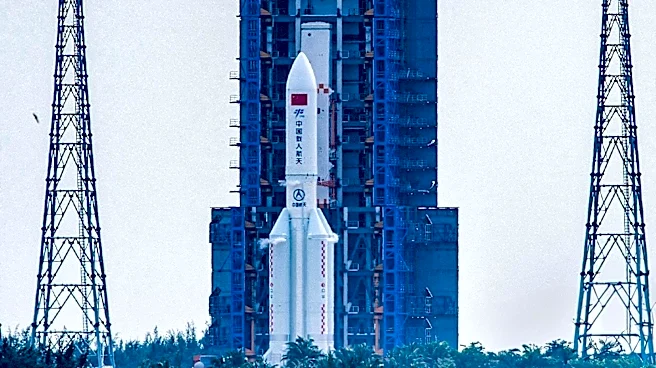
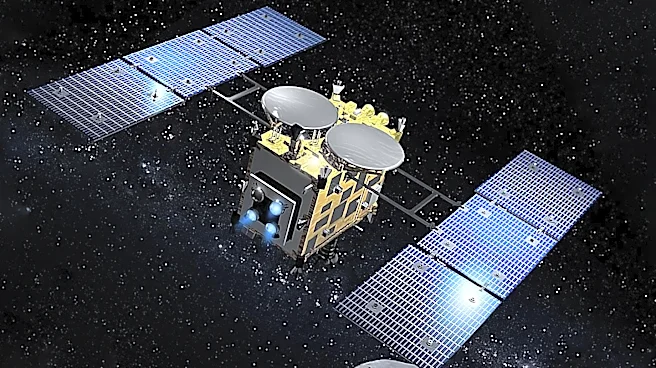
The Chinese spacecraft Tianwen-2 has successfully approached the asteroid Kamo'oalewa, one of Earth's quasi-satellites, coming within 20 kilometers of the celestial body. Launched in May 2025, the probe has traveled approximately 620 million miles over
400 days to reach its target. The mission aims to collect data on the asteroid's composition, structure, and physical characteristics. China plans to attempt sample collection from the asteroid's surface using two methods: short-term contact and anchoring the spacecraft with a special anchor. If successful, China will become the third country to obtain asteroid samples, potentially being the first to use the anchoring method. Kamo'oalewa, discovered in 2016, is a small asteroid with rapid rotation, making sample collection challenging.
Why It's Important?
This mission represents a significant advancement in China's space exploration capabilities, potentially positioning the country as a leader in asteroid research. Successfully collecting samples from Kamo'oalewa could provide valuable insights into the early solar system and the formation of celestial bodies. The mission also demonstrates China's growing technological prowess and ambition in space exploration, which could have implications for international space cooperation and competition. The data collected could enhance scientific understanding and contribute to future space missions, including those aimed at planetary defense and resource utilization.