







What's Happening?
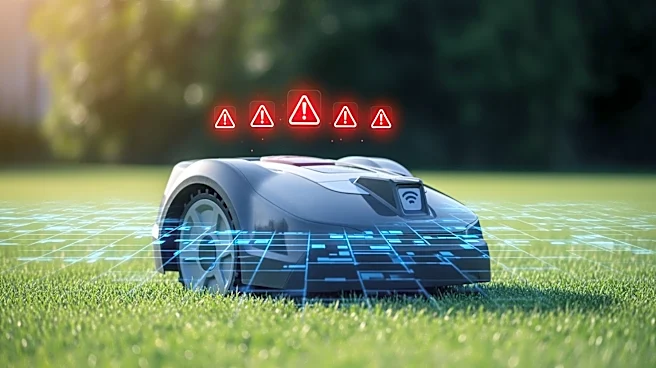
A recent investigation has revealed significant security vulnerabilities in Yarbo robot lawn mowers, which could allow hackers to remotely control these devices. Security researcher Andreas Makris demonstrated that by exploiting these vulnerabilities,
a hacker could override safety features, such as the emergency stop button, and potentially use the robots for malicious purposes. The Yarbo robots, which are equipped with blades and can be configured as lawn mowers, snowblowers, or leaf blowers, are susceptible to being hacked due to a consistent root password and a backdoor that allows remote access. This flaw could enable hackers to turn the robots into part of a botnet or use them to spy on users by accessing their home networks.
Why It's Important?
The security flaws in Yarbo's robots highlight a broader issue of cybersecurity in consumer electronics, particularly in devices connected to the Internet of Things (IoT). These vulnerabilities pose significant risks not only to individual users but also to broader infrastructure, as hackers could potentially use these devices to gather sensitive information or disrupt services. The incident underscores the need for manufacturers to prioritize security in the design and deployment of smart devices. Consumers and industries relying on such technology could face privacy breaches and operational disruptions if these vulnerabilities are not addressed.
What's Next?
Yarbo has acknowledged the security issues and is reportedly working on a fix to address the vulnerabilities. The company plans to implement stronger security measures, including an in-app customer approval mechanism and improved audit logging. Additionally, Yarbo is considering establishing a Security Response Center and a bug bounty program to encourage the reporting of vulnerabilities. These steps are crucial to restoring consumer trust and ensuring the safety of their products. The broader tech industry may also need to adopt more rigorous security standards to prevent similar issues in the future.
Beyond the Headlines
This incident raises ethical questions about the responsibility of tech companies to ensure the security of their products. The ease with which these devices can be hacked suggests a need for regulatory oversight and industry-wide standards for IoT security. Furthermore, the potential for these devices to be used in cyberattacks highlights the interconnected nature of modern technology and the importance of securing all points of access. As smart devices become more prevalent, the implications of such vulnerabilities could extend beyond individual users to impact national security and critical infrastructure.