



What's Happening?
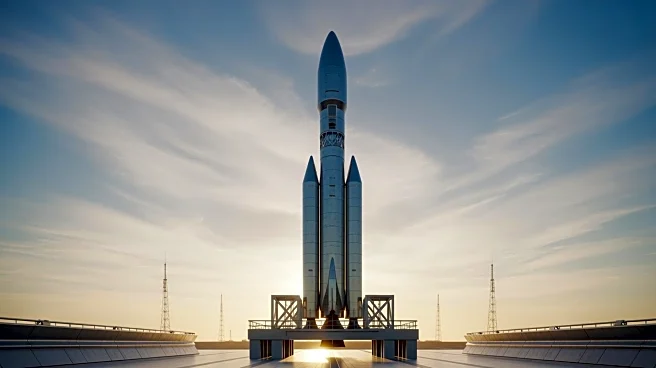
NASA has transported its repaired moon rocket, the Space Launch System, from the hangar to the launch pad at Kennedy Space Center in Florida. This move is in preparation for a planned lunar fly-around mission set for early April. The rocket, which stands
at 322 feet, was moved using a massive crawler, a process that took 12 hours due to delays caused by high winds. The Artemis II mission will carry four astronauts, including three Americans and one Canadian, who will orbit the moon before returning to Earth. This mission has faced delays due to hydrogen fuel leaks and clogged helium lines, which required repairs both at the pad and in the Vehicle Assembly Building. The Artemis program aims to eventually land astronauts on the moon by 2028, marking the first such mission since Apollo 17 in 1972.
Why It's Important?
The successful launch of the Artemis II mission is crucial for NASA's long-term goals of lunar exploration and establishing a sustainable human presence on the moon. This mission represents a significant step in the Artemis program, which seeks to advance human space exploration beyond low Earth orbit. The mission's success could bolster U.S. leadership in space exploration and inspire international collaboration, as evidenced by the inclusion of a Canadian astronaut. Additionally, overcoming technical challenges such as fuel leaks and helium line issues demonstrates NASA's capability to address and resolve complex engineering problems, which is vital for future missions. The Artemis program also has implications for scientific research, potential economic opportunities, and technological advancements.
What's Next?
If the Artemis II mission launches successfully in April, it will pave the way for subsequent missions, including the planned lunar landing in 2028. NASA will continue to monitor and address any technical issues that arise during the mission to ensure the safety and success of future endeavors. The agency is also likely to engage with international partners and private companies to further develop lunar exploration technologies and infrastructure. Public and governmental support for the Artemis program will be crucial as NASA seeks funding and resources to achieve its ambitious goals.