
What's Happening?
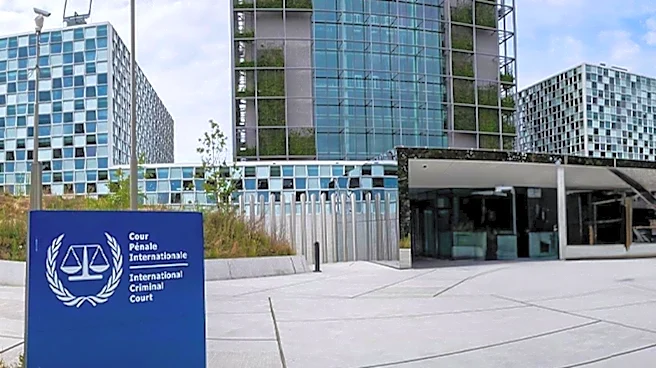
The prosecutor of the International Criminal Court (ICC) has formally requested trial judges to admit two additional expert reports in the crimes against humanity trial of former president Rodrigo Duterte.
In a filing dated October 30 and released last week, acting ICC prosecutor Mame Mandiaye Niang asked Trial Chamber III to accept a joint expert report from witnesses P-1071 and P-1078, as well as a separate expert report from witness P-1162. Witnesses P-1071 and P-1078 are described as widely published and recognized academic experts in their field. Witness P-1162's report specifically analyzes the use of deadly force by the Philippine National Police (PNP), focusing on Bulacan province, and evaluates indicators such as ratios of suspects wounded versus killed, suspects killed versus police officers killed, and the number of operations against suspects killed. According to Niang, P-1162's expert concluded that there is a "compelling evidentiary basis to conclude" that most encounters were staged to conceal targeted killings, representing a "systemic practice of extrajudicial execution rather than legitimate law enforcement."
Why It's Important?
This development is significant as it seeks to strengthen the evidentiary basis for the ICC's case against former president Duterte, particularly concerning the alleged extrajudicial killings during his administration's 'war on drugs.' The admission of these expert reports could provide crucial analytical insights into the patterns and nature of the violence, potentially linking individual incidents to a broader systemic practice. For the U.S., while not directly involved, the case underscores international legal norms regarding human rights and accountability, which are often central to U.S. foreign policy considerations. The outcome could influence how the international community views state-sponsored campaigns against crime and the responsibilities of leaders under international law. It also highlights the role of expert testimony in complex international criminal proceedings, where establishing systemic patterns of abuse is critical. The findings could set precedents for future cases involving alleged state-sanctioned violence.
What's Next?
The Trial Chamber III of the ICC will now consider the prosecutor's request to admit these additional expert reports. If admitted, these reports will become part of the evidence considered in the crimes against humanity trial of former president Duterte. The proceedings are moving forward, with former president Duterte having appeared before the ICC in The Hague, Netherlands, on September 16, 2026. The focus will be on the court's decision regarding the admissibility of these reports and how they will be weighed against other evidence presented. The legal process will continue to unfold, potentially leading to further hearings and decisions on the merits of the case. The international community will be closely watching the ICC's handling of this high-profile case, given its implications for international justice and accountability.
Beyond the Headlines
The request for additional expert reports delves into the complex legal and ethical dimensions of state-led anti-crime campaigns. The expert analysis of 'staged encounters' and 'systemic practice of extrajudicial execution' raises profound questions about the distinction between legitimate law enforcement and state-sanctioned violence. This case could contribute to the evolving understanding of what constitutes 'crimes against humanity' in the context of domestic policy, particularly when such policies lead to widespread or systematic attacks against a civilian population. It also highlights the challenges of prosecuting such cases, where evidence often relies on detailed analysis of patterns and statistical data to demonstrate intent and systemic nature. The outcome could have long-term implications for how international law addresses human rights abuses committed under the guise of national security or public order, potentially influencing future state conduct and international legal frameworks.