







What's Happening?
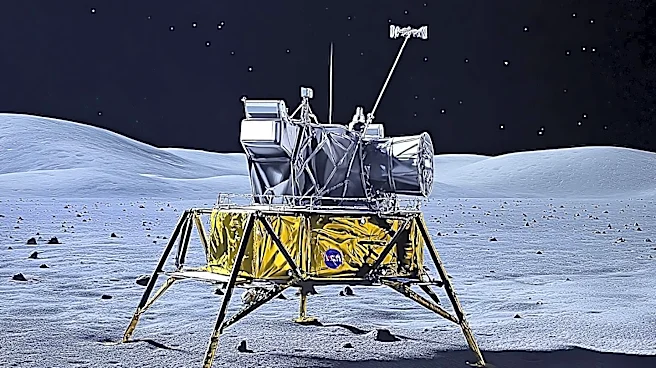
NASA has terminated its lunar lander mission with Draper, a decision made due to significant delays in the spacecraft's development. The task order, part of the Commercial Lunar Payload Services (CLPS) program, was initially valued at $73 million. Delays
in the lander's redesign pushed the projected landing date to 2030 or 2031, prompting NASA to end the contract. Draper had been working with ispace-U.S., a subcontractor responsible for the lander's development. Despite the cancellation, NASA remains committed to the mission's scientific objectives and plans to deliver the developed instruments to the moon through future CLPS landings.
Why It's Important?
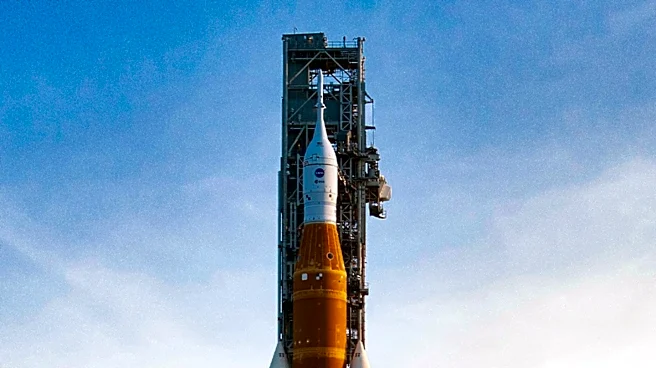
The cancellation of the Draper lunar lander mission highlights the challenges faced in space exploration projects, particularly those involving complex engineering and international collaboration. This decision underscores the importance of meeting project timelines and the potential financial and strategic impacts of delays. For NASA, the termination allows for the reallocation of resources to other missions that align with its lunar exploration goals. The move also reflects NASA's commitment to maintaining a robust schedule for its Artemis program, which aims to increase lunar activity and establish a sustainable human presence on the moon.
What's Next?
NASA plans to continue its lunar exploration efforts by integrating the scientific instruments from the canceled mission into future CLPS landings. The agency has already awarded new lunar lander missions to companies like Astrobotic, Firefly Aerospace, and Intuitive Machines, which may accommodate additional payloads. These missions are part of NASA's broader strategy to enhance lunar exploration and support the Artemis program. The agency's focus will likely remain on ensuring that future projects adhere to timelines and deliver on scientific objectives, reinforcing its leadership in space exploration.