



What's Happening?
U.S. Representative Joe Neguse and Colorado Governor Jared Polis have formally requested that top-ranking federal officials cease the use of helicopter roundups for wild horses within Colorado. This call to action follows concerns regarding the treatment
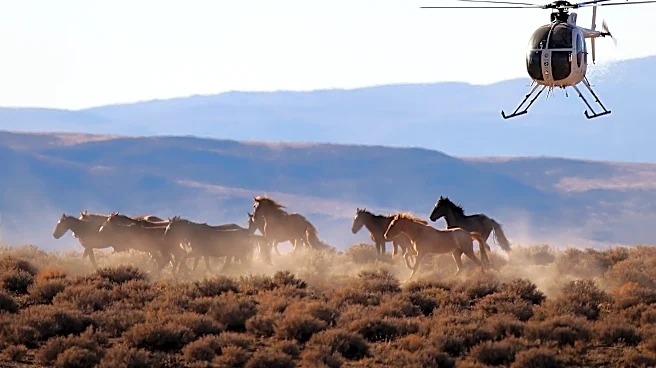
of these animals during such operations. A 2024 file photo from the Bureau of Land Management (BLM) wild horse roundup on the Little Book Cliffs Wild Horse Range depicted a wild horse being steered by a helicopter, illustrating the method in question. Colorado currently hosts four designated wild horse herd management areas: Piceance-East Douglas, Sand Wash Basin, Little Book Cliffs, and Spring Creek Basin. The request from Rep. Neguse and Gov. Polis highlights a growing debate over the methods employed by federal agencies in managing wild horse populations across the Western United States.
Why It's Important?
The intervention by Representative Neguse and Governor Polis underscores a significant point of contention between state leadership, federal agencies, and animal welfare advocates regarding wildlife management practices. The use of helicopters in wild horse roundups has long been a controversial topic, with critics citing concerns about the stress and potential injury to the horses, as well as the ethical implications of such methods. This move could influence future federal policies on wild horse management, potentially leading to a reevaluation of current practices by the Bureau of Land Management. For Colorado, it reflects a state-level push for more humane and environmentally sensitive approaches to managing its natural resources and wildlife populations, potentially setting a precedent for other states with similar wild horse populations.
What's Next?
Following the formal request from Representative Neguse and Governor Polis, federal officials, particularly those within the Bureau of Land Management, are expected to review the concerns raised. This could lead to a dialogue between state and federal authorities to explore alternative methods for wild horse population control that are deemed more humane and less disruptive. Potential outcomes include a temporary halt to helicopter roundups, the implementation of new guidelines for these operations, or an increased focus on non-lethal management strategies such as fertility control. Animal welfare organizations and environmental groups will likely continue to advocate for the cessation of helicopter roundups, maintaining pressure on federal agencies to adopt more compassionate approaches to wildlife management.
Beyond the Headlines
The debate over wild horse roundups extends beyond animal welfare to broader questions of land management, ecological balance, and the role of federal agencies in overseeing public lands. Wild horse populations are often seen as symbols of the American West, yet their increasing numbers in certain areas can lead to overgrazing and competition with livestock and native wildlife for resources. The call to end helicopter roundups highlights the tension between preserving iconic wildlife and managing ecosystems sustainably. This issue also touches upon the ethical responsibilities of government in its interactions with nature and the ongoing challenge of balancing human interests with the well-being of animal populations on public lands.